
TL;DR — Quick summary: A barista is the specialist who, using professional coffee-brewing methods, prepares and serves coffee-based drinks — espresso, V60, Aeropress, Chemex, Turkish coffee, and more. The word means “bartender” in Italian; with the third wave of coffee it became a global profession. In Turkey, becoming a barista does not require a university degree; SCA (Specialty Coffee Association) accreditation or MEB-approved courses are preferred. The SCA Foundation level raises the average salary by 8%. As of 2026, a starting barista in Turkey earns ₺35,000–40,000 net per month; experienced baristas in third-wave boutique cafés reach ₺50,000–54,500 gross. Head barista positions sit in the ₺65,000–90,000 range. SCA-accredited 4–6-week training costs ₺30,000–50,000.
“Barista” has become a familiar word in recent years. With the spread of the third-wave coffee movement in Turkey’s major cities, it was inevitable that this word — and this profession — would surface as often as it does. As of 2026, the number of specialty cafés in Turkey has surpassed 4,500 and the sector employs an estimated 35,000 baristas. This guide covers the barista profession in full, with up-to-date salary data and certification requirements.
What Is a Barista?
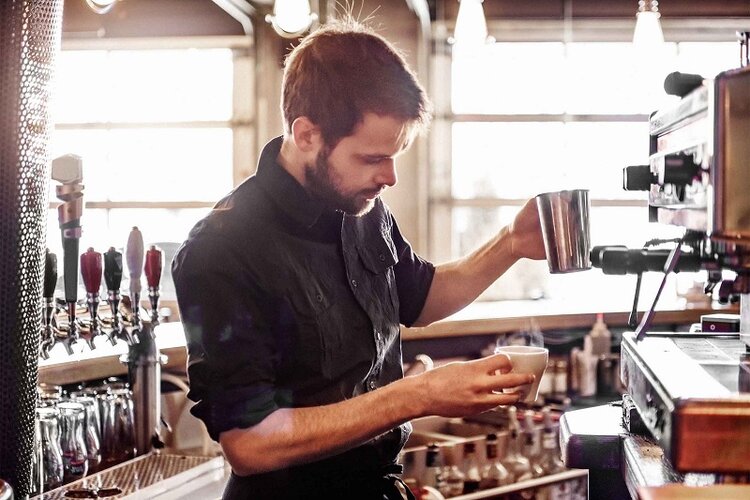
A barista is the person who, especially in third-wave coffee shops, uses professional brewing methods to prepare and serve coffee-based drinks and other beverages. The word literally means “bartender” in Italian, but globally it now refers to those who prepare coffee varieties using methods such as espresso, V60, Aeropress, and Syphon. Beyond preparing and serving coffee, the profession has a refined and artistic dimension — making the barista what we might also call a “coffee artist.”
The modern barista does not merely make coffee; they understand the journey of the bean from origin through processing and roasting to brewing, share knowledge with customers, design latte art, calibrate the espresso machine daily, and exercise quality control. Competitions like the World Barista Championship (WBC) have shown that this profession can also evolve into a sport-like competitive career. From Turkey, Turgay Yıldızlı drew attention in the 2010 WBC finals, and Burak Eserdem became the 2023 Aeropress Turkey Champion.
Coffee Waves and the Barista’s Place
The coffee industry defines three main “waves,” and the barista’s role shifts with each:
| Wave | Period | Focus | Barista Role |
|---|---|---|---|
| 1st Wave | 1900–1960 | Accessibility, speed (instant) | Did not exist as a distinct role |
| 2nd Wave | 1960–2000 | Brand, café experience (Starbucks) | Standardized in-house training, machine competence |
| 3rd Wave | 2000–present | Specialty, terroir, transparency | Expert: bean-brew-serve full-chain understanding |
| 4th Wave (forming) | 2020–present | Science, sustainability, fermentation | Science partner: extraction chemistry, water profiles |
In third- and fourth-wave cafés, the barista profession has evolved from a “waiter + machinist” hybrid into a career demanding both technical and communication expertise.
What Does a Barista Do and What Are Their Responsibilities?
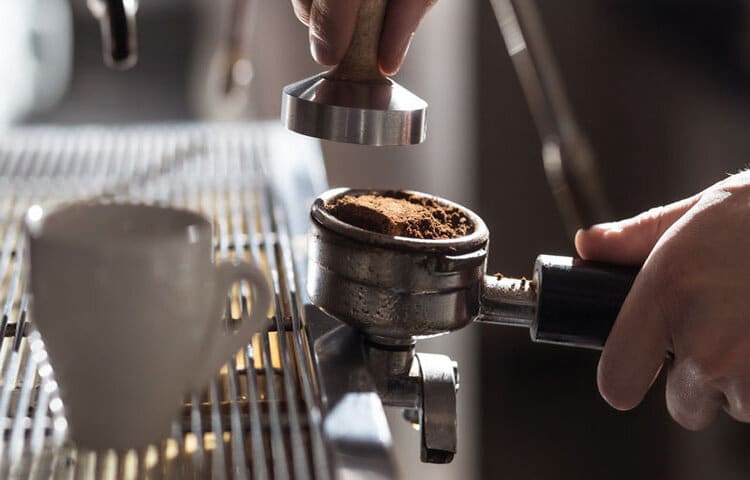
A barista’s core duties include:
- Educating customers about coffee beans, varieties, and new products,
- Guiding customers toward the best beverage choice by explaining ingredients and brewing methods,
- Grinding coffee beans according to the chosen beverage,
- Professionally brewing and serving Espresso, Caffè Latte, Caffè Macchiato, Cappuccino, V60, Syphon, Chemex, Cold Brew, Turkish Coffee, etc.,
- Cleaning and performing daily maintenance on coffee machines and equipment,
- Managing the workflow behind the bar,
- Knowing product stock and replenishing as needed,
- Preparing, heating and serving sandwiches, pastries, cookies, simit, etc.,
- Taking orders and payments when needed,
- Following occupational health and safety regulations and maintaining a clean, safe work environment.
In addition, a good barista should:
- Not only produce a delicious coffee but also serve it beautifully. Continual development in latte art and presentation is therefore essential.
- Have solid knowledge of the bean’s journey from soil to cup — coffee blends, roasting processes, milk foam — with a scientific eye. Experiment with different beans and brewing methods.
- Stay professionally current; attend trainings and workshops.
- Master daily “dialing in” of the espresso machine: TDS, yield, ratio and time should be reconciled for every new bean.
- Read customer profiles; explain brewing methods in simple language to a first-time specialty-coffee customer.
How to Become a Barista
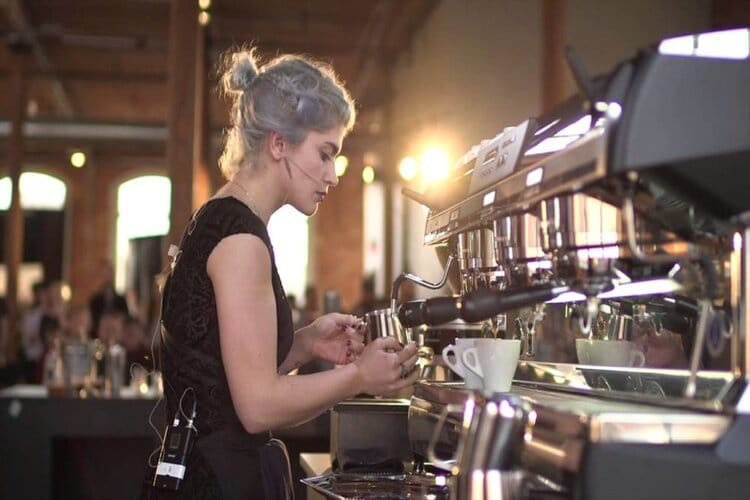
There is no requirement to graduate from a particular bachelor’s or associate program. By taking a course and obtaining the relevant certification from a specialized institution, you can practice the profession. Note, however, that experience matters greatly. A certificate alone will not land you a job. You must start from the ground up in a café — and seize every opportunity to develop yourself.
Becoming a Barista in 2026 — 5 Steps
- Basic training: A MEB-approved barista course (3–6 months, ₺32,000–35,000) teaches basic brewing, the espresso machine, coffee beans, and customer communication.
- SCA Foundation certificate: SCA-accredited Foundation classes take 2–3 days and cost ₺8,000–15,000. This certificate adds about 8% to the salary.
- First job: Start at a chain or boutique. Starbucks, Gloria Jeans, Espressolab and similar chains offer internal programs that are a strong school for beginners.
- Specialization: Progress through SCA modules: Brewing Intermediate, Barista Intermediate, Roasting, Sensory Skills. Each module costs ₺12,000–25,000 on average.
- Competitions and international experience: Compete in the Turkish Barista Championship, Latte Art Championship, etc. This polishes the CV and expands the sector network.
SCA Certification Levels and Their Turkish Equivalents
| Level | Duration | Average Cost | Competence Provided |
|---|---|---|---|
| Foundation | 2–3 days | ₺8,000–15,000 | Entry to the sector; espresso fundamentals |
| Intermediate | 3–4 days | ₺12,000–25,000 | Calibration, brewing parameters, basic latte art |
| Professional | 5–6 days | ₺25,000–45,000 | Advanced brewing, sensory matching, path to trainer |
In Turkey, SCA-accredited trainers operate in Istanbul (Coffee Hub Lab, Kronotrop Academy), Ankara (Barista Academy), and Izmir (Espressolab Academy).
Who Succeeds in This Profession?
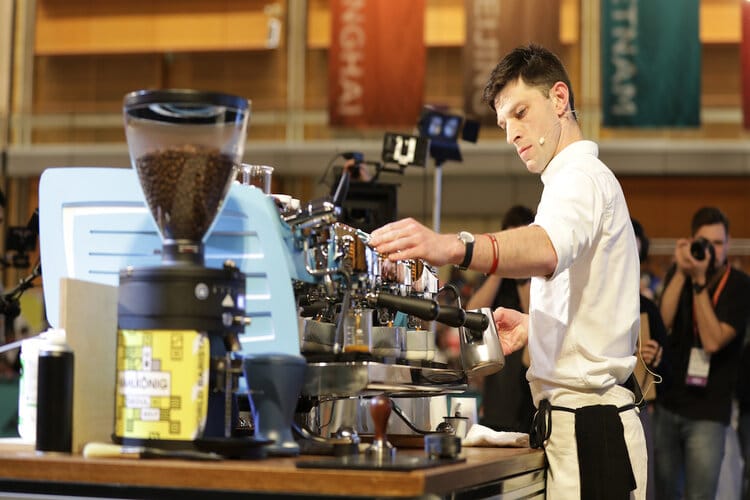
- Those who are passionate about coffee and brewing,
- Those interested in chemistry and gastronomy,
- Patient people,
- Friendly people with strong social skills,
- People who enjoy serving and talking about what they serve,
- Those who can adapt to long working hours,
- Those who can stand and work physically for long hours,
- Those who trust their commercial intuition,
— individuals like these tend to succeed. Additional qualities such as a good scent-and-taste memory, micro-time-management (serving three customers simultaneously), and the discipline of self-improvement within a repetitive routine significantly enhance productivity.
Barista Salaries

In 2021, the average barista salary was around ₺3,000, and experienced specialists earned up to ₺6,000 — figures clustered around the then-minimum wage (₺3,577).
As of 2026, the picture is as follows:
| Experience & Position | Gross Salary (₺/month) | Net Salary (₺/month) |
|---|---|---|
| Beginner (chain, near minimum +) | 38,000–42,000 | 35,000–38,000 |
| 1–3 years (chain/boutique) | 42,000–48,000 | 37,000–41,000 |
| 3–5 years (third-wave boutique) | 50,000–58,000 | 43,000–50,000 |
| Head Barista / Barista Trainer | 65,000–90,000 | 55,000–75,000 |
| Coffee Manager / Academy Trainer | 90,000–130,000 | 73,000–100,000 |
The gross-net gap reflects SGK contributions and tax brackets. Tip income (especially in third-wave boutiques) can add ₺5,000–15,000 per month. SCA certification, latte art championship placings, and English fluency all push the table upward.
On the sector side: specialty coffee in Turkey grew at an average of 28% per year between 2020 and 2026. This growth keeps baristas in high demand. From an employer’s perspective, a barista’s total monthly cost (gross + SGK + bonuses + training) averages ₺65,000–110,000.
Career Progression for a Barista
The barista profession is not closed to long-term careers. After 3–5 years of on-the-floor experience, common pathways include:
- Head Barista / Barista Trainer: Bar management, shift planning, training new staff.
- Roaster: Green-bean selection, roast profiling, quality control.
- Q-Grader: SCA-certified coffee evaluation specialist; a critical role for export-import companies.
- Café Owner / Partner: Opening a specialty café — a starting investment of ₺800,000–2,500,000.
- Coffee Educator / SCA AST: Becoming an Authorized SCA Trainer and teaching others.
- Sales / Brand Ambassador: Technical sales for machine, bean, or equipment brands.
Frequently Asked Questions
1. Is a degree required to become a barista?
No. A high-school diploma suffices. A university degree is an advantage but not mandatory. Graduates of Gastronomy, Food Engineering, or Business stand out particularly in management roles.
2. Does SCA certification really raise the salary?
Yes. According to 2025 industry studies, SCA Foundation raises starting salaries by an average of 8%, Intermediate by 15–18%, and Professional by 25–30%. For upper roles (Head Barista, Coffee Manager), SCA Intermediate is effectively a prerequisite.
3. Which is the best city in Turkey for a barista?
Istanbul, by far: more than 1,800 specialty cafés and the highest salary band. Then Ankara, Izmir, Antalya, and Bodrum (seasonally high). The neighborhoods of Beşiktaş, Kadıköy, Cihangir, Karaköy, and Bomonti in Istanbul lead.
4. How many hours does a barista work?
A standard shift is 8–9 hours. Opening (06:30–15:30) and closing (14:00–23:00) shifts are typical. Under the Labor Code, weekly hours should not exceed 45; overtime pay applies beyond that.
5. Do I have to drink coffee to be a barista?
To learn flavors and aromas, regular cupping is required, and that involves tasting. To control caffeine intake, many professionals use the “evaluate without swallowing” technique during cupping.
6. Is latte art a mandatory skill?
In modern cafés, effectively yes. Baristas are expected to learn at least the basic heart, rosetta, and tulip designs in their first three months. Placing in latte art championships is a serious career accelerator.
You Might Also Like
https://ceotudent.com/basarili-isimlerden-daha-fazla-kahve-tuketiyor-musunuz
The 3 Core Reasons Behind the Trust Starbucks Builds in All of Us
Sources
- Specialty Coffee Association (SCA), “Coffee Skills Program” — https://sca.coffee/sca-coffee-skills-program
- Kahvemakineleri.com, “Barista Salaries 2026” — https://www.kahvemakineleri.com/barista-maaslari/
- Meslek Maaş, “Barista Salaries 2026: Chains, Third Wave, and Boutiques” — https://meslekmaas.com/barista-maaslari/
- Anisah Coffee, “What You Need to Become a Professional Barista — 2026 Guide” — https://anisahcoffee.com/en/blogs/blog/barista-olmak-icin-neler-gerekli
- Coffee People, “How to Get a Barista Certificate — 5 Steps” — https://kahveinsanlari.com/barista-sertifikasi-nasil-alinir-turkiyede-barista-olmak-icin-5-adim/
- Barista Academy, “SCA Certified Module” — https://yunuscakmak.com/sca-baristakursu/
- Boenstitu, “What Is a Barista? How to Become One?” — https://boenstitu.com/meslek/genel/barista
- İŞKUR National Occupational Standards, “Barista (Level 4)” — Vocational Qualifications Authority, 2018 (revised 2024).