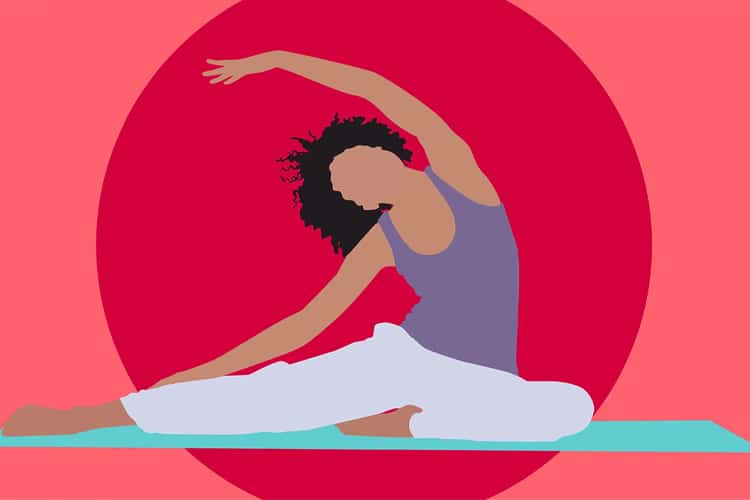
TL;DR — Quick summary: Yin Yoga is a slow, passive yoga practice in which every pose is held for 3–5 minutes (7–10 minutes at advanced levels). Unlike active yoga styles, it does not work the muscles; instead it targets fascia, connective tissue, joints, and especially the deep structures of the hip-spine-thigh corridor. It began in the 1970s as the U.S. teacher Paulie Zink’s synthesis of the Chinese yin-yang philosophy and Hatha yoga; Paul Grilley and Sarah Powers developed it and introduced it to the world. A Yin session typically lasts 60–90 minutes; for beginners 30–40 minutes is recommended. In 2026 Turkey, studio drop-in sessions cost ₺200–450, monthly packages ₺1,500–3,500. Benefits — improved flexibility, stress reduction, parasympathetic activation, better sleep — are supported by research.
Yoga first emerged in ancient India and has been a teaching of broad scope. It takes its name from the Sanskrit Yuj, meaning union, binding, yoking. Yin Yoga is one of the most effective and popular forms of this practice.
For someone new to yoga, the breathing techniques and standing poses can feel challenging at first. If you are not active in everyday life, some muscle groups may strain or even tremble during your initial sessions.
Yoga has many forms. Which one a beginner should start with depends entirely on their expectations and needs. Finding the form that is right for you is up to you. This article explores the “Yin Yoga” style in depth and presents its practical conditions in 2026 Turkey alongside a side-by-side comparison with other yoga styles.
- Hatha Yoga
- Ashtanga Yoga
- Vinyasa Yoga
- Yin Yoga
- Kundalini Yoga
- Yoga Therapy
- Restorative Yoga
- Bikram Yoga
What to Know Before Beginning Yoga
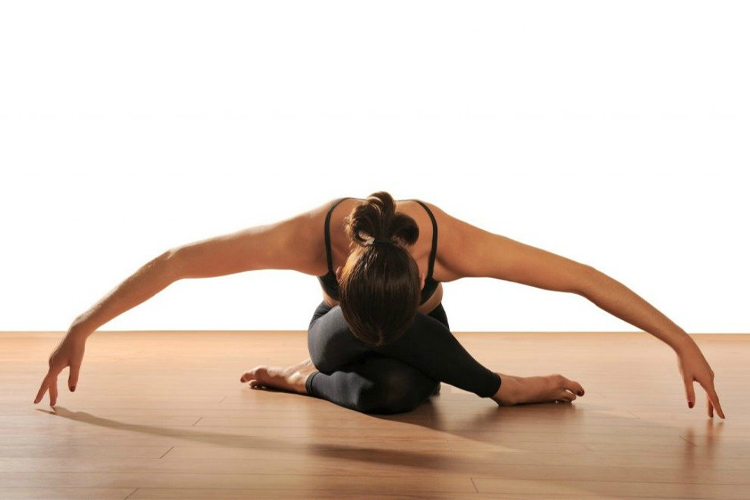
Some useful information to know before practicing yoga:
- Yoga may relax you, but you will also experience sweating and fatigue during practice. If your muscles have been inactive for a long time, this is especially natural in the first sessions.
- End meals and drinks 1–2 hours before practice. Trying to perform poses while the digestive system is still working can cause reflux.
- Use the restroom right before. An empty bladder and bowel allow far greater freedom of movement.
- Unless your instructor says otherwise, breathe steadily through the nose. Keep inhalations and exhalations even.
- Make sure the room is well-ventilated. Avoid heavy fragrances like incense or room sprays.
- Hydrate well before and after practice.
- If you have any personal health condition, consult your doctor before practicing yoga.
Essential Equipment for Yoga
- Roll out a mat to prevent slipping. The mat should be slightly longer than your height and of medium thickness. Some poses are best done barefoot to fully prevent slipping.
- Wear elastic, lightweight, breathable clothing. Keep a change of clothes on hand for after sweat-heavy sessions.
- Some accessories vary by yoga style. In a yoga studio these are usually provided.
- For Yin Yoga specifically, useful props: 1–2 blocks, a bolster or long cushion, a strap, and a thin blanket. These let you comfortably hold poses for long durations.
Now to the Main Subject: Where Did Yin Yoga Come From?
Yin yoga’s history reaches back to traditional Chinese medicine. The modern form was first developed in the late 1970s by the American martial arts teacher Paulie Zink, who merged the Taoist yoga tradition with Hatha yoga and introduced “long passive holds” to the West. From the 1980s onward Paul Grilley placed this practice in an anatomical framework and systematized it under the name “Yin Yoga.” Grilley teaches anatomy while training certified Yin Yoga teachers. Other important names in Yin Yoga research and teaching include Sarah Powers, Bernie Clark, and Bryan Kest.
If we step beyond defining the body as purely physical, every body carries two kinds of energy channel: feminine and masculine. When these two energies become one, we are formed. Yin is the feminine energy; Yang is the masculine. Yang is the muscle in our body; Yin is the connective tissue beneath the muscles.
Modern fascia research provides a concrete scientific basis for this ancient framework. The anatomist Robert Schleip’s studies since 2012 have shown that fascia is not merely a passive tissue: it plays an active role in nerve signaling, proprioception, and postural control. Because Yin Yoga’s long holds increase the hydration and elasticity of this fascial network, the equation “slow motion = deep tissue change” is research-supported.
What Does Yin Yoga Aim For?
Yin Yoga targets the upper leg, hips, the spine and surrounding connective tissues. In its asanas (poses), waiting for long durations is essential. While developing connective tissue, the practice also stretches the muscles. The goal is not muscle strengthening but the controlled lengthening of connective tissue.
This separates Yin from other styles. As with all yoga, beginners are advised to start with a teacher. Although it may look easy, you can hurt yourself in asanas without proper awareness. Fundamentals and correct mechanics must be learned first. With sufficient knowledge and experience, you can practice at home.
A Yin pose develops in three stages: (1) settling into correct alignment, (2) reaching the edge of movement and waiting without moving, (3) deepening over time while letting the body follow the breath. When these three come together, not just joint mobility but also the autonomic nervous system transforms; the parasympathetic (“rest and repair”) mode comes forward.
Who Should Practice Yin Yoga?
If you feel that your energy flow is dysregulated and over-stimulated, if you find yourself constantly tired in the rush and stress of the day, Yin Yoga can do you more good than you expect.
In today’s world we are reachable every minute and over-stimulated. The mind tries to process every piece of information thrown at it. Reaching stillness begins with relaxing the mind. As Yin Yoga becomes part of your life, you cleanse subconscious emotions. There is no age range required — it is suitable for all ages.
Especially suited to: desk workers, those under chronic stress, those with low-grade chronic back or hip pain, athletes (runners, CrossFit) on recovery days, those with poor sleep, women in menopause/perimenopause, and the creatively blocked.
Caution: acute connective-tissue injury, hypermobility syndrome (Ehlers-Danlos, etc.), advanced osteoporosis, post-operative recovery. In these cases, a physiotherapist’s or doctor’s clearance is mandatory.
While Practicing Yin Yoga
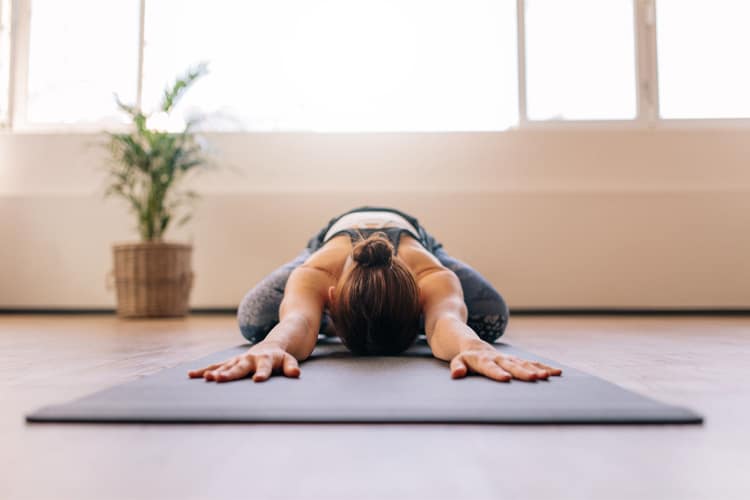
Remember that Yin poses are not done quickly or actively; move into them slowly and gently. Do not burn all your energy entering an asana. Yoga done with proper foundations relaxes you. Do not be stubborn in movements that approach the threshold of pain.
A Yin Yoga session lasts 30–40 minutes at beginner level, 60 minutes at intermediate, 75–90 minutes at advanced. Do each movement consciously, and once you settle into a pose, try not to move further. At first, aim to hold a pose for 1–3 minutes; over time you can extend to 5–7 minutes.
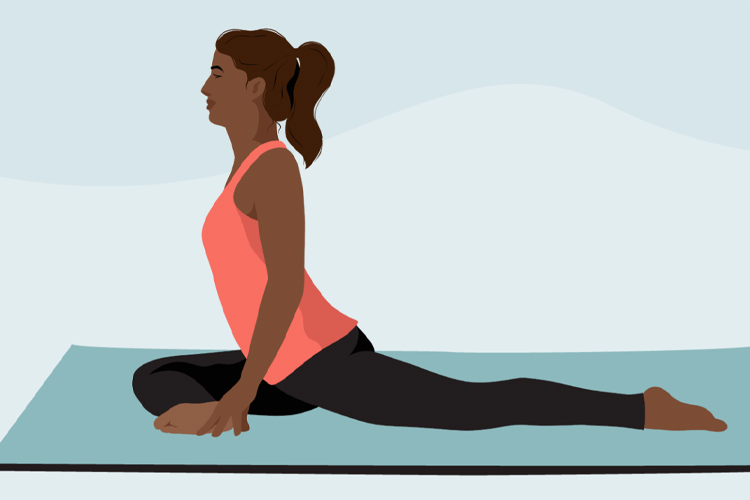
Common poses in a classical Yin sequence include: Butterfly, Caterpillar, Dragon, Sphinx, Saddle, Shoelace, Twisted Root, Banana Pose, and a final Savasana. Each pose has alternative (modification) variants; if you feel pain rather than tension or discomfort, switch to a modification.
Nearly every pose has an alternative. If a pose pushes you too hard, makes you uncomfortable, or if you do not feel any stretch, ask the instructor for an alternative.
After your practice, you can lie on your back at your spot to rest. Spending a long time in this position will leave you feeling refreshed as though you had taken a long, restful nap.
Yin Yoga Compared to Other Yoga Styles
The table below compares the most common yoga styles with Yin Yoga:
| Yoga Style | Pace & Duration | Main Target | Hold Length | Best Suited For |
|---|---|---|---|---|
| Yin Yoga | Slow, passive, 60–90 min | Fascia, connective tissue, joints, parasympathetic | 3–7 minutes | Stress, flexibility, recovery — any level |
| Hatha Yoga | Moderate, mixed, 60 min | Basic poses, body awareness | 30–60 seconds | Beginners |
| Vinyasa Yoga | Flowing, fast, 60–75 min | Breath-movement synchronization, mild cardio | 5–15 seconds | Lovers of dynamic flow |
| Ashtanga Yoga | Very dynamic, fixed series, 90 min | Strength, endurance, discipline | 5 breaths | Disciplined intermediate-advanced practitioners |
| Bikram (Hot) | In heated room (40°C), 90 min | Detox, sweating, flexibility | 30–60 seconds | Those who enjoy heat |
| Kundalini | Mixed (breath + meditation + pose) | Spiritual awakening, energy work | Variable | Seekers of a meditative dimension |
| Restorative | Very slow, fully passive, 60 min | Total rest with props | 5–20 minutes | Recovery from fatigue or illness |
Yin is most often confused with Restorative Yoga. The difference is clear: in Yin, a conscious “stress” (the sensation of stretching) is sought, and through this connective tissue is remodeled; in Restorative, the entire body is fully supported, no tension is targeted, and the aim is nervous-system recovery.
Hatha Yoga and Yin Yoga
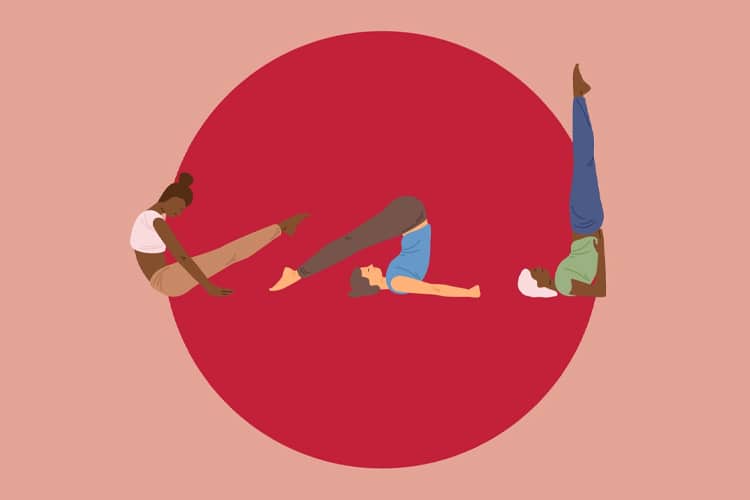
As in Hatha Yoga, Yin Yoga has pose transitions. While the body gains flexibility, muscles strengthen. The transition difference is this: Yin holds each pose much longer, stretching the body, whereas Hatha shifts swiftly and actively from one pose to the next.
For these reasons, Hatha focuses on muscles and strength, while Yin targets connective tissue and joints.
Yin makes the body flexible. Hatha is the most widespread yoga style and is often called “classical yoga.” For first-timers, Hatha is a natural starting point.
Benefits of Yin Yoga
- Yin Yoga is a therapy for the body with healing effects.
- The stretching movements are particularly good for joint problems and help protect general health.
- It sends signals to the body’s energy channels and balances existing energy.
- It clears and calms the mind. It prevents connective tissue from shortening or deteriorating, and renews it healthily.
- Brings flexibility and mobility. Practiced regularly, it prevents stress and stress-related illnesses, including cellulite.
- Helps relieve many psychological problems, raising quality of life. Feeds the mind-body harmony.
- By reducing stress-hormone secretion, it supports weight management; for the same reasons it has been observed to slow aging.
- A 2023 study published in the International Journal of Yoga, following 30 participants over 8 weeks, showed an average 26% drop in anxiety scores in those practicing Yin Yoga regularly.
- Activates the parasympathetic nervous system — which raises heart rate variability (HRV).
- Sleep research shows that a 30-minute evening Yin practice can shorten sleep onset latency by an average of 12–15 minutes.
As with other yoga styles, the effects become visible and lasting only through continuous practice. Recommended frequency: 2–3 sessions per week, for at least 8 weeks.
Yin Yoga in 2026 Turkey: Cost and Access
Yin Yoga has been one of the fastest-growing yoga niches in Turkey over the past 5 years. Specialized Yin studios operate in Istanbul, Ankara, Izmir, Antalya, Bodrum, and Eskişehir. Most Hatha-Vinyasa studios also schedule at least one weekly Yin class.
- Studio drop-in: ₺200–450 in 2026; high-end boutique studios ₺600–800.
- Monthly 8-session package: ₺1,500–3,500.
- Online platforms (Insight Timer, Down Dog, Yoga with Adriene): ₺100–250/month, or entirely free (ad-supported).
- Teacher training (50-hour Yin Yoga TT): ₺18,000–45,000. Yoga Alliance accreditation is preferred.
Home setup investment: a quality mat (₺1,000–2,500), 2 blocks (₺250–600), 1 bolster (₺700–1,400), 1 strap (₺150–300), and a blanket. Total ₺2,500–5,000, with proper care lasting 5–10 years.
Frequently Asked Questions
1. What is the biggest difference between Yin and Hatha Yoga?
Hatha is active, muscle-oriented, and holds poses 30–60 seconds; Yin is passive, connective-tissue-oriented, and holds poses 3–7 minutes. Hatha strengthens muscles; Yin increases fascia and joint mobility.
2. Can Yin Yoga be done every day?
Yes, but for beginners 2–3 sessions per week are recommended. The body needs time to “remodel” itself. Over-practicing can weaken joint stability in the hypermobile.
3. Can Yin Yoga be done during pregnancy?
Yes, with modifications; avoid deep forward folds that compress the abdomen and tight twists. Attending pregnancy-specific Yin classes or working with a prenatal yoga teacher is the safest path.
4. Is there meditation in Yin Yoga?
There is no direct guided meditation, but long pose holds create a naturally meditative state. Yin is therefore an excellent gateway to meditation.
5. How should you breathe in Yin Yoga?
Through the nose, naturally and deeply. The forced “ujjayi” breath of Vinyasa is not required. Lengthening the exhale slightly while deepening into a pose enhances parasympathetic activation.
6. How long until Yin Yoga shows results?
Relaxation and improved sleep can be felt after a single session. Measurable changes in flexibility and joint mobility require 6–8 weeks of regular practice.
7. How do you find a Yin Yoga teacher in Turkey?
Search the Yoga Alliance Turkey directory and the Turkish Yoga Federation (TFYF) teacher rosters for instructors with Yin certification. When choosing a studio, ensure the teacher has at least 50 hours of Yin Yoga training.
Sources
- Paul Grilley, Yin Yoga: Outline of a Quiet Practice, White Cloud Press, 2002 — https://www.paulgrilley.com/
- Bernie Clark, The Complete Guide to Yin Yoga, Wild Strawberry, 2012.
- Sarah Powers, Insight Yoga, Shambhala Publications, 2008.
- Robert Schleip & Werner Klingler, “Active fascial contractility,” Medical Hypotheses, 2005.
- “What Is Yin Yoga? Its Benefits” — Wellbeing Association, https://www.wellbeingdernegi.org/yin-yoga-nedir-elif-imrahor/
- “Yin Yoga: Practice, Benefits, Tips” — Live to Bloom, https://livetobloom.com/yin-yoga-101/
- Yogamma, “Yin Yoga Style” — https://yogamma.com.tr/yoga-stilleri/yin-yoga
- Nui Yoga, “What Is Yin Yoga? How Is It Done?” — https://nuiyoga.com/blogs/news/yin-yoga-nedir
- International Journal of Yoga, “Effects of Yin Yoga on stress and anxiety,” 2023, Vol. 16, No. 2.
This post is also available in: