TL;DR: The original 2020 article listed 8 money tips from successful people: (1) Warren Buffett – be passionate, (2) Richard Branson – write everything down, (3) Sean Combs – not just talent or luck, (4) Bill Gates – don’t get a swelled head, (5) Jeff Bezos – know it won’t be easy, (6) Tim Ferriss – focus on learning while young, (7) Julie Rice – be relentless, (8) Alexa von Tobel – have a plan. In the 2026 solopreneur + AI era these 8 principles still apply; only now they live inside one-person companies running on AI co-founders. This guide preserves the original 8 quotes and ties each one to a modern solopreneur practice (Mercury, Wise, Stripe, Notion, Claude, Cursor), cross-reads them with Designjoy ($1M ARR alone) + Photo AI ($150K MRR) + Marc Lou ($80K MRR), adds a self-employment tax + estimated-tax + Profit First timeline and ends with 6 FAQs.
The moment an entrepreneur starts making money, what they need most is not “a new tactic” – it is a calibrated principle. The people who have built billion-dollar businesses keep returning to the same handful of ideas: passion, discipline, humility, planning. These principles were true in 2020. In the 2026 world of solopreneurs – one-person companies powered by AI co-founders – they are still just as true. Only the application has changed.
Brett Williams runs Designjoy at $1M ARR alone in 2026. Pieter Levels runs Photo AI at $150K MRR with zero employees. Marc Lou pulls $80K MRR out of 10+ micro-SaaS products. All of them sit on the same 8 principles. Below we keep the original quotes one by one and connect each to the 2026 solopreneur practice.
1) Warren Buffett – “Be Passionate” (a 2020 classic, foundational for the 2026 solopreneur)
Berkshire Hathaway’s Warren Buffett, in the original:
“Being successful at almost anything means having passion. If you can find someone with reasonable intelligence and a tremendous passion for what they do, they will find people to walk with them even if the top of the next hill is not visible, and they will realize their dreams.”
2026 solopreneur practice: In a one-person world passion is not a luxury – it is a sustainability requirement. An AI co-founder can ship a SaaS in 3 months, but the founder still has to iterate and market that same product for 18 more months alone. Pieter Levels (Photo AI, Nomad List) openly says he spends 4-5 hours every morning coding the same product; without passion, no Cursor + Claude Code stack would sustain that.
Practical filter: in the first 90 days, are you still energized after trying 5 different angles on the same problem? Then you can sustain it. If you are tired, the product or niche is wrong.
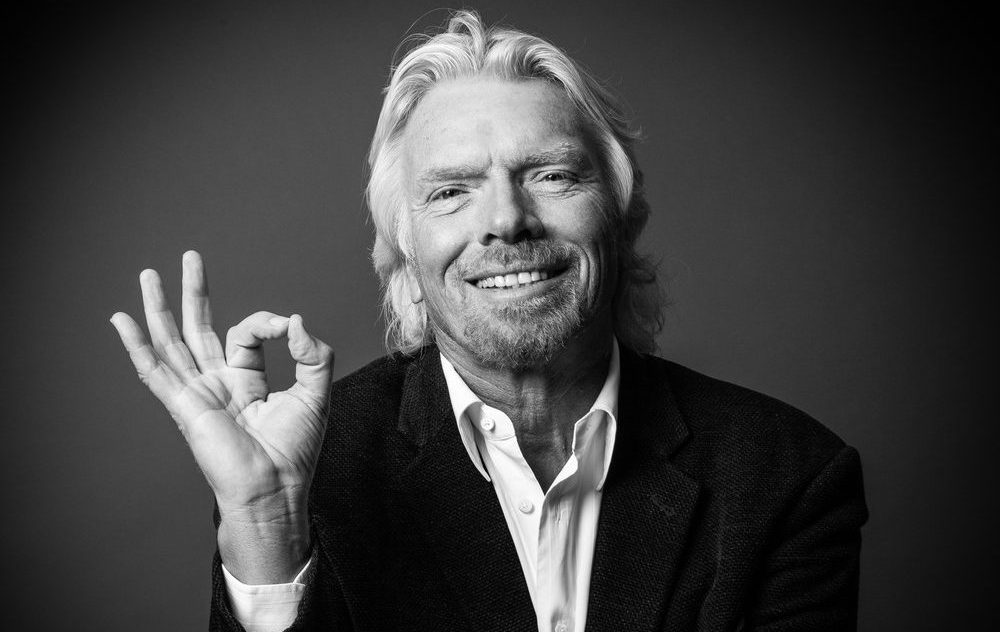
2) Richard Branson – “Write Everything Down” (2020 classic, 2026 Notion + Claude edition)
Virgin Group’s Richard Branson:
“I have spent my life making lists. They range from people to call, ideas to chase, businesses to set up, people who can get things done. I also have lists of subjects to blog about, tweets to send, and future plans.”
2026 solopreneur practice: Branson’s paper lists have become a Notion + Claude + Obsidian architecture. The solopreneur’s external brain is four layers:
- Notion – idea, customer, product, financial-target databases
- Obsidian – daily notes, research, personal second brain
- Claude Projects – memory of past decisions and sector research
- Linear / GitHub Issues – product backlog
Marc Lou (10+ micro-SaaS) says it explicitly: “I keep 200+ ideas in a single Notion page. I never reject an idea, I only score it.” The 2020 rule “write everything down” became, in 2026, “write everything into a structured database.”
3) Sean Combs – “Not Just Talent or Luck” (2020 classic, even more true in the AI era)
Hip-hop figure Sean “Diddy” Combs delivered a flat message: success is not right-place-right-time, it is durable work.
2026 solopreneur practice: The first illusion of the AI era goes: “ChatGPT writes a tweet, therefore easy money.” Reality is the opposite. Levels.io codes 12+ hours a day. Marc Lou has shipped a micro-SaaS every week for two years. Justin Welsh ($5M+ a year as a solopreneur newsletter) starts writing at 6am every morning.
Where does AI actually help? It does not reduce work; it absorbs low-value work (boilerplate, copy-paste research, manual reporting) and frees the founder’s high-value work (strategy, customer conversations, product decisions). The advice was true in 2020; in 2026 it is sharper: if AI makes you lazy, you stop winning.
4) Bill Gates – “Don’t Get a Swelled Head” (a 2020 classic, mandatory after $0 → $10K MRR)
Microsoft’s Bill Gates:
“Success is a lousy teacher. It seduces smart people into thinking they can’t lose. Don’t stop. Don’t stop learning. Past success doesn’t guarantee future success. Even the smartest, most connected, most talented people can lose.”
2026 solopreneur practice: The most dangerous moment for a solopreneur is the $0 → $10K MRR transition. At that point the founder feels “I cracked it” and makes three classic mistakes:
- Tries to 3x the product (instead of: doing customer interviews).
- Tries to clone competitors using AI in one week and open multiple lanes (instead of: getting one product to 30%+ margin).
- Believes the revenue is now passive and stops checking notifications (instead of: watching weekly churn + LTV/CAC).
Brett Williams (Designjoy) still does weekly customer calls even after $1M ARR alone. As Gates said: past success is not insurance.
5) Jeff Bezos – “Know It Won’t Be Easy” (2020 classic, the 2026 handstand metaphor still holds)
Amazon’s Jeff Bezos:
“The coach gave great advice on the very first lesson. Most people think that if they work really hard, they will master a handstand in two weeks. The reality is that this requires daily practice for 6 months. If you think you can do it in two weeks, you will end up quitting.”
2026 solopreneur practice: Bezos’s handstand metaphor lands exactly in the “vibe coding” era. Cursor + Claude Code can ship a prototype in 3 hours – but will that prototype reach $10K MRR? The data is clear:
| Stage | Real duration (2026 median) | False expectation |
|---|---|---|
| Prototype → first paying customer | 4-8 weeks | “1 week is enough” |
| First customer → $1K MRR | 3-6 months | “2 months will do” |
| $1K → $10K MRR | 9-18 months | “6 months at most” |
| $10K → $30K MRR | 12-24 months | “6x in a year” |
Numbers synthesised from Indie Hackers and Microconf case reports. As Bezos said: those who underestimate the timeline quit at month 6.
6) Tim Ferriss – “Focus on Learning While You’re Young” (a 2020 classic, with AI literacy + negotiation in 2026)
The 4-Hour Workweek author and podcaster Tim Ferriss:
“Work for or with people who close deals, and pick up a few skills – especially negotiation and coding. People often assume that earning money right after school takes priority over building skills. A superior skill set is real job security.”
2026 solopreneur practice: Ferriss’s 2020 list (negotiation + coding) has expanded. The core skill set for a solopreneur in 2026:
- Negotiation (Ferriss 2020 + Voss 2016) – Chris Voss’s Never Split the Difference principles produce direct ROI in pricing and churn-prevention calls.
- Coding (Ferriss 2020 + AI 2026) – vibe coding (Cursor, Claude Code) gives non-technical founders a “one-person engineering team.”
- Writing (new in 2026) – Justin Welsh, Sahil Bloom and other solopreneurs produce 80%+ of revenue through writing.
- AI literacy (new in 2026) – prompt engineering, LLM API cost management, agent orchestration.
- Distribution (new in 2026) – newsletter, X/Twitter, podcast, SEO-friendly blog.
True in 2020, in 2026 the list is five items long; any missing one makes a solopreneur unsustainable.
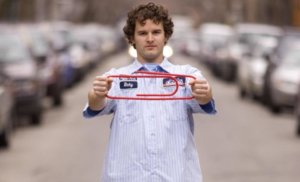
7) Julie Rice – “Be Relentless” (2020 classic, identical to the 2026 customer-obsession term)
SoulCycle co-founder Julie Rice’s coffee story:
“If someone asks you for a cup of coffee and you forgot to ask whether they want milk and sugar, take them one black, one with sugar, one with milk, and one with both. After they take what they want, you bring the other three back. If you don’t know something, don’t leave the table until you do. To keep going, you have to be determined and relentless.”
2026 solopreneur practice: What Rice describes is a miniature version of Amazon’s “customer obsession” principle in 2026. For a solopreneur, the practice is:
- Talk one-on-one with your first 100 customers. WhatsApp, email, Zoom – it does not matter. Designjoy still does this.
- Replace “I don’t know” with “I’ll learn and get back to you within 24 hours.” That speed is the one moat solopreneurs hold over enterprises.
- Compress research to 10 minutes with AI. Ask Claude “how do I position Y solution for X customer segment,” skim 5 usable pages, then write the real answer yourself.
Rice’s relentlessness was a service-sector tip in 2020; in 2026 it is the solopreneur’s churn-prevention weapon.
8) Alexa von Tobel – “Have a Plan” (2020 classic, mandatory in 2026 with Profit First + AI cash flow)
LearnVest.com founder Alexa von Tobel:
“Not having a financial plan is itself a plan – a really bad one.”
2026 solopreneur practice: Von Tobel’s 2020 warning is sharper in 2026 because revenue streams multiplied (Stripe SaaS, Lemon Squeezy digital products, Substack/Beehiiv newsletter, Gumroad courses). The modern template:
- Profit First (Mike Michalowicz, 2017): automatically split every incoming dollar into profit (5-15%), tax (20-30%), opex (30-50%), owner-pay (30-50%).
- Mercury / Wise business account: never mix the personal account with business income.
- AI cash flow forecast: Notion + Claude monthly 12-week projection; add 20% safety margin on AI stack cost (Claude API, OpenAI, Cursor, etc.).
- Self-employment tax + estimated-tax timeline: keep 25-30% of gross revenue in a separate account to cover income tax plus self-employment / payroll and health-coverage contributions; pay estimated tax quarterly and file the annual return in the spring.
As von Tobel said: if you have no plan, you have no plan.
2020 vs 2026: Side-by-Side Comparison of the 8 Tips
| Tip | 2020 Context | 2026 Solopreneur Context |
|---|---|---|
| Be passionate (Buffett) | Love your work | Can you sustain 18 months of product-market fit work? Filter. |
| Write everything (Branson) | Paper lists | Notion + Claude + Obsidian + Linear |
| Not talent/luck (Combs) | Work hard | If AI makes you lazy, you lose |
| Don’t swell up (Gates) | Don’t get cocky early | $0→$10K hides 3 mistakes (scaling, cloning, passivity) |
| Not easy (Bezos) | 6 months of discipline | Prototype → $30K MRR = 24-48 real months |
| Focus on learning (Ferriss) | Negotiation + coding | + AI literacy, writing, distribution |
| Be relentless (Rice) | Service quality | First-100 customer interviews + 24-hour SLA |
| Make a plan (von Tobel) | Budget | Profit First + Mercury + AI cash flow forecast |
2026 Solopreneur Cases: Who Applies Which Principle, How?
Brett Williams – Designjoy ($1M ARR, alone)
– Passion: same niche (subscription design service) for 7+ years.
– Plan: monthly subscription + flat pricing = predictable cash flow.
– Relentlessness: weekly customer calls, no outsourcing.
Pieter Levels – Photo AI ($150K MRR), Nomad List, Remote OK
– Writing + distribution: public build on X/Twitter (10K+ followers).
– Learning: 12 hours a day of code, Cursor + Claude Code.
– AI literacy: writes his own LLM-API cost dashboards in Python.
Marc Lou – 10+ micro-SaaS ($80K MRR)
– Write everything: 200+ ideas in Notion with weekly scoring.
– Fast prototype → kill: if no traction in 90 days, shutdown.
– Plan: Mercury account + Profit First.
Justin Welsh – Solopreneur newsletter ($5M+ a year)
– Passion + repetition: 6 years of the same writing slot (06:00).
– Negotiation: consulting hour at $1,500-$3,000 (Voss principles).
– Plan: Stripe + Beehiiv + Gumroad multi-channel revenue.
Practical Finance Timeline for a Solopreneur (2026)
A solopreneur running a one-person company (sole proprietorship / single-member LLC) runs the year like this:
- Monthly: transfer 50-70% of incoming Mercury / Wise revenue to the operating bank account, apply Profit First bucketing.
- Quarterly: estimated-tax payment (roughly April, June, September, January) – set aside 15-20% of gross for federal and state income tax.
- Annually: file the personal income-tax return in the spring; check for local small-business grants or startup support programs (for newcomers).
- Ongoing: self-employment tax plus a private health-insurance premium – a recurring monthly cost that varies widely by income and coverage; budget for it as a fixed line item.
- AI stack budget: $100-$300/month (Claude, OpenAI, Cursor, Linear, Notion, Beehiiv) – reserve 20% for end-of-month buffer.
This timeline looked very different in 2020 (salaried employee + side hustle model); in 2026 it is the AI-era solopreneur’s standard financial architecture.
Frequently Asked Questions
1. How much savings do I need to start as a solopreneur?
Practical baseline: 6 months of personal expenses + $1,500-$3,000 for an AI stack + product infrastructure (domain, hosting, Stripe setup). For most people that lands in the $10,000-$25,000 starting-capital range.
2. How many hours does the AI co-founder model take per day?
Levels.io 12+, Brett Williams 6-8, Marc Lou 8-10 hours. AI does not cut work; it cuts low-value work.
3. Is Buffett’s “passion” principle still valid or is “passion” overrated?
Valid but narrowed. As Cal Newport argues in So Good They Can’t Ignore You (Grand Central, 2012), passion is not a starting filter but an outcome built on skill. For the solopreneur it becomes the filter: “can I tolerate 18 more months on this product?”
4. What is the most practical 2026 tool for von Tobel’s financial-plan advice?
Mercury + Wise (USD/EUR account), a Profit First Notion template, and a monthly cash-flow report auto-generated by Claude API. For bookkeeping, a tool like QuickBooks or Xero.
5. Is Ferriss’s 2020 list (negotiation + coding) the same in 2026?
No, it expanded. 2026 list: negotiation, coding (Cursor + Claude Code), writing, AI literacy, distribution. All five are required; missing any one makes a solopreneur unsustainable.
6. What is the first revenue target for a solopreneur?
First 12 months: $1,000 MRR. That is the “is this product actually making money?” test. Past $1K MRR, going to 10K is a distribution and pricing problem, not a technical one.
Related Reading
- What is a Solopreneur? 10 Ways to Build a One-Person Company in 2026 – solopreneur fundamentals on ceotudent.com.
- The 4 Classic Money Mistakes Entrepreneurs Make + the 2026 Solopreneur Edition – Profit First and finance timeline details.
- What is Micro-SaaS? 2026 Solo Founder Guide – Marc Lou-style product-portfolio model.
- How to Build a Personal Brand in the Digital World in 6 Steps – the solopreneur’s distribution engine.
References
- Warren Buffett, Berkshire Hathaway annual letters, 1977-2024.
- Richard Branson, Losing My Virginity, Crown Business, 1998.
- Bill Gates, biographical material on Microsoft’s founding years (Penguin Random House).
- Jeff Bezos, Amazon shareholder letters, 1997-2021 collected.
- Tim Ferriss, The 4-Hour Workweek, Crown Publishing, 2007.
- Mike Michalowicz, Profit First, Penguin Portfolio, 2017.
- Chris Voss, Never Split the Difference, HarperBusiness, 2016.
- Cal Newport, So Good They Can’t Ignore You, Grand Central Publishing, 2012.
This post is also available in:










)
&description=&image=https://ceotudent.com/wp-content/uploads/2021/07/yrjzcu.jpg)