TL;DR – Quick summary: A 2019 MoneyTips.com survey of 160 successful people running businesses from home found that 97% of entrepreneurs enjoyed working from home and 54% rejected an offer of free outside workspace. That picture only strengthened by 2026: solopreneurs like Brett Williams (Designjoy, $1M+ ARR alone), Pieter Levels (Photo AI, $150K MRR, zero staff) and Marc Lou (10+ micro-SaaS) run their entire operations from home. This guide keeps the original 4 advantages (price, comfort zone, silence, flexibility) and 3 main disadvantages (social isolation, bed proximity, client meetings/concentration); on top it adds the 2026 tool stack (Notion + Claude + n8n + Loom + Mercury), a 2019 vs 2026 comparison, the home-office tax angle for the self-employed, self-employment cost notes, practical counter-strategies for isolation and burnout, and a 7-item FAQ. In 2026 the solopreneur’s home office is no longer “a flexible workspace” – it is a company-wide productivity system.
In 2019 the MoneyTips.com survey showed that 97% of entrepreneurs running their business from home enjoyed it, and 54% rejected free outside workspace. At the time the home office was framed as a preference and a flexibility option.
By 2026 the picture has shifted. The new default base for solopreneurs – one-person companies running on AI co-founders (Claude, Cursor, n8n) – is the home. Brett Williams crossed $1M+ ARR with Designjoy in 2024, alone. Pieter Levels grew Photo AI to $150K monthly MRR with zero staff from his nomadic “home office.” Marc Lou runs 10+ small SaaS from his apartment in Lisbon.
So the question is no longer “home or external office?” The question is: what is the 2026 standard for a solopreneur’s home office system, which advantages and disadvantages survive in the AI era, which disappeared, which are new? This piece keeps the original 4 advantages and 3 disadvantages while turning them into a modern solopreneur system guide.
Advantage 1 – Price: Zero Rent + an AI Stack for ~$200/Month
The original article’s first advantage was price: no rent, productive space with a little setup. That is still true – and stronger in 2026.
A small co-working desk in a major city center runs roughly $350-550 per month in 2026 (approximate, illustrative). With the same budget at home:
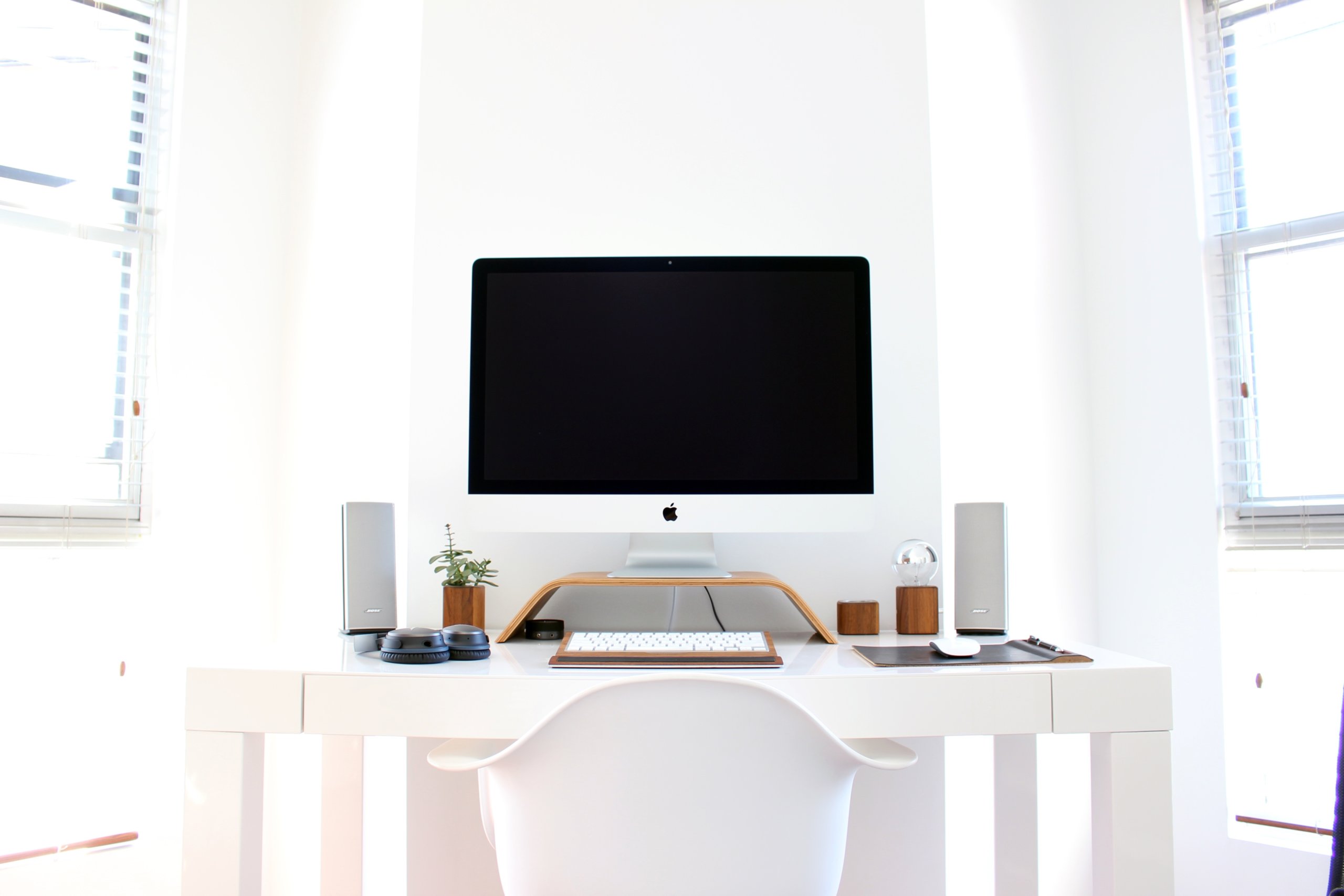
- A professional monitor + ergonomic chair + recording setup is a one-time $700-1,200 (approximate).
- The monthly AI stack (Claude Pro $20 + ChatGPT Plus $20 + Cursor Pro $20 + Perplexity Pro $20 + n8n Cloud $20 + Notion $10 ≈ $110/month) covers your entire operating “team” for less than the cost of an external office.
For a solopreneur the price advantage is not just “no rent paid” – it means the same budget funds an AI co-founder team. That leverage did not exist in 2019.
Bonus for the self-employed: a portion of home-office electricity, internet, a rent share and equipment depreciation can typically be deducted as a business expense (confirm with your accountant or tax advisor). That lowers net tax.
Advantage 2 – Comfort Zone: Critical for Deep Work in 2026
The original article’s second advantage was being in the comfort zone: no need to dress up to go out, no commute prep, the value of a five-minute extra sleep.
In 2026 the meaning of this advantage expanded. The solopreneur’s scarcest resource is deep-work blocks: 90-120 minute uninterrupted high-concentration sessions. Cal Newport’s Deep Work (Grand Central Publishing, 2016) defined the concept, and AI work raised the bar – decisions must be quick, prompts deliberate, code reviews careful.
The home office buys ~2-3 extra deep-work hours per day vs an external office:
- No traffic or commute time.
- No “let’s grab a coffee” interruptions.
- The early morning slot (07:00-10:00 – peak creative hours) is fully yours.
Trade-off: the comfort zone turns into laziness without discipline. Fix: a fixed “office outfit” (joggers + clean t-shirt is fine, pyjamas are not), a 5-hour “office block” (e.g. 09:00-14:00), phone in another room.
Advantage 3 – Silence: Acoustic + Notion Second Brain
The original third advantage was silence. True – but in 2026 silence means more than physical: cognitive silence matters too.
Physical silence in 2026: a closeable door, acoustic curtain panels, and Sony WH-1000XM5-class noise-cancelling headphones (~$350). (Figures approximate, illustrative.)
Cognitive silence: park every “open loop” in Notion. Tiago Forte’s Building a Second Brain (Atria Books, 2022) is non-negotiable for solopreneurs – the brain stops asking “did I forget X?” all day. A daily Claude summary agent (n8n + Claude API + Notion API) closes the loop: at 18:00 it summarises the day and proposes tomorrow’s three priorities.
Advantage 4 – Flexible Schedule: Async Operations With AI
The original final advantage was schedule flexibility – work when you want.
In 2026 that flexibility evolved into async operations: the solopreneur deep-works at 06:00, walks at 14:00, sends a Loom client update at 22:00. The client replies the next morning. No meeting in the middle.
The async stack:
- Loom: screen + voice recording, 5 minutes replaces a 30-minute meeting.
- n8n: the moment a client fills a form, automated onboarding email + Notion CRM update.
- Claude API: first-pass replies on support tickets, you approve.
- Cron + Beehiiv: newsletter ships automatically once a week.
The flexibility is also a trap: with no boundaries you work 24/7. Fix: explicit office hours (10:00-18:00) and notifications off after hours.
Disadvantage 1 – Social Isolation: The #1 Solopreneur Complaint of 2026
The original article’s first disadvantage was isolation risk for social personalities: lack of conversation hurts productivity. In 2019 it was a warning; in 2026 it is measured and proven.
Indie Hackers’ 2024 survey put social isolation at the top of solopreneur challenges (68%). Sahil Lavingia in The Minimalist Entrepreneur (Portfolio/Penguin, 2021) wrote “no exit without community” pointing at exactly this.
Counters:
- Two days a week at a co-working space (WeWork, Industrious, Regus and similar in most cities).
- Two mastermind groups (4-6 founders, 1 hour/week on Zoom).
- One digital community (Indie Hackers, MicroConf, Hampton).
- One physical founder event per month (Startup Grind, Founder Stories, local founder meetups).
Lesson: home office works, but “alone” working does not. Community is not an accessory – it is part of the system.
Disadvantage 2 – The Bed and Burnout: Setting Boundaries
The original second disadvantage was bed proximity: it pulls you into a nap that does not refresh. In 2026 this got worse because the solopreneur lives in the office-kitchen-bed triangle.
Modern fix: spatial boundaries.
- Bedroom ≠ office. Separate room when possible; if not, a divider or a clear lighting boundary.
- Distinct “office mode” vs “home mode” clothing.
- After 18:00, close the laptop and move it to another room.
Burnout is the solopreneur’s #1 health risk in 2026. Anders Ericsson’s deliberate-practice research (Cambridge University Press, The Cambridge Handbook of Expertise and Expert Performance, 2018) shows ~4 hours/day of high concentration is the physiological ceiling. Above it you are not just unproductive – you are damaging health.
Disadvantage 3 – Client Meetings and Professional Perception: 2026 Solutions
The original third disadvantage was client meetings: inviting them home is awkward, the article suggested renting space from co-working venues. In 2026 this is still true and the toolkit is richer:
- Virtual meetings as default: ~80% of client conversations happen on Zoom/Google Meet/Loom asynchronously. A good mic (Shure MV7, ~$250) + a good camera (Logitech Brio or iPhone Continuity Camera) + tidy background = professional perception.
- Hybrid office subscriptions: WeWork, Industrious, Regus and similar run ~$150-250/month hot-desk plans with included meeting rooms (approximate, illustrative).
- Professional address: virtual office services (Regus, Opus virtual packages, ~$50-120/month) provide a business address, mail handling, and meeting room booking.
The original article’s concentration deficit issue too: the home office lacks coworker discipline. Counters:
- Pomodoro + Focusmate: Focusmate pairs you with a random user for a silent 50-minute video session.
- Body doubling: “study with me” YouTube channels (Justin Sung, Ali Abdaal) for ambient co-working.
- Café days: one day a week working outside resets motivation.
2019 vs 2026 Solopreneur Home Office Comparison
| Dimension | 2019 home office (original survey era) | 2026 solopreneur home office |
|---|---|---|
| Typical user | Freelancer + small entrepreneur | AI-augmented solopreneur, micro-SaaS founder, productized service |
| Monthly workspace cost | $0 (rent excluded) | $0 rent + ~$110 AI stack |
| Client meetings | Mostly in person | ~80% virtual (Zoom, async Loom) |
| Equipment budget | Laptop + basic desk: ~$300 | Laptop + monitor + mic + cam + ergonomics: ~$1,500 |
| Isolation management | Individual initiative | Mastermind + co-working + digital community system |
| Productivity metric | Hours in seat | Output (commitments, MRR, customer count) |
| Boundary control | Low | High (async + notification discipline) |
| Tax advantage | Vague/under-used | Self-employed expense write-offs intentional |
| Typical income ceiling | $5K-15K/month | $5K-250K/month (Designjoy, Photo AI cases) |
| Side team | None | AI co-founder stack (6 layers) |
(Equipment and workspace figures above are approximate and illustrative.)
The Solopreneur Home Office: Legal and Financial Frame
If you set up a solopreneur home office, the practical 2026 checklist (general – confirm specifics for your jurisdiction):
- Business structure: register as a sole proprietorship or single-member LLC (one-time setup plus ongoing bookkeeping; costs vary by jurisdiction).
- Tax registration: income/self-employment tax, sales tax/VAT where applicable, and any quarterly estimated payments.
- Self-employment contributions: budget for self-employment tax and your own health insurance – these replace an employer’s payroll contributions.
- Invoicing: modern invoicing tools (e.g. Stripe Invoicing, Wave, QuickBooks) handle compliant invoices; check any e-invoicing mandates in your country.
- Home as workplace: widely accepted by tax authorities. Deduct a fair share of electricity/internet/rent and depreciate equipment.
- Banking + payments: a business bank account plus Stripe/PayPal/Wise for receiving client and global revenue.
For globally-paid clients: Stripe Atlas + a US LLC + Mercury banking, with roughly $1,500-$2,500/year in compliance cost, becomes economical above ~$50K/month gross.
Frequently Asked Questions (FAQ)
1. Should I prefer home office or co-working in 2026?
A hybrid is the 2026 standard. 3 days home (deep work), 2 days co-working (social + client meetings). Net cost ~$150-250/month for a hot desk + home setup, 60-80% cheaper than a full-time external office (approximate).
2. What are the 3 most critical home-office investments?
1) Ergonomic chair (Herman Miller Aeron or alternatives like Steelcase, Ergohuman; ~$300-1,200). 2) Extra monitor (27” 4K minimum). 3) Noise-cancelling headphones. The trio adds ~40% to deep-work block duration on average. (Prices approximate.)
3. What is the minimum system to avoid social isolation?
At least one weekly physical community touch (co-working, mastermind, coffee meet) + at least two weekly virtual co-working sessions (Focusmate, founder Discord) + at least one event/month (founder meetup, conference, launch).
4. How does the home office create tax savings?
As a self-employed sole proprietor: a fair business-use share of rent, electricity, water, gas and internet (commonly 30-50%, validated with your accountant) becomes a deductible expense. Same for laptop, furniture and equipment, depreciated over years. Net tax can fall meaningfully each year (the exact amount depends on your jurisdiction and income).
5. What does the solopreneur’s health routine require?
Minimum 30 min of outdoor walking daily (vitamin D + cortisol regulation), 5 min standing every 90 min, ergonomic monitor at eye level, 8 glasses of water, and solid private health insurance (since the self-employed carry their own cover). With bus factor 1, health = business continuity.
6. What is the actual monthly cost of an AI co-founder stack?
A typical solopreneur stack: Claude Pro $20 + ChatGPT Plus $20 + Cursor Pro $20 + Perplexity Pro $20 + n8n Cloud $20 + Notion Business $10 + GitHub Copilot $10 + Loom Business $15 = ~$135/month. For comparison, a junior employee costs many times that per month once salary and overhead are included.
7. When should you graduate from a home office?
Three signals: (1) sustained $30K+ MRR with 50+ customers, (2) recurring meeting load 15+ hours/week, (3) urgent first hire (developer or CS). When two of three hit, move to hybrid (home + co-working + first remote hire). A full physical office is rare in 2026; most stay hybrid.
Conclusion and Related Reading
The 97% satisfaction figure from MoneyTips’ 2019 survey still holds in 2026. What changed: the home office is no longer a “flexibility preference” – it is the default operations centre for the AI-augmented solopreneur. The original four advantages (price, comfort, silence, flexibility) survived; “comfort → deep-work discipline,” “silence → cognitive + physical layers,” “flexibility → async operations.” The three main disadvantages (isolation, the bed, client meetings) are still real but each has 2026 toolset answers. For solopreneurs the “golden ratio” looks like sole proprietorship + home office + AI stack + 2 co-working days per week.
Related reading:
- Solopreneur – The 2026 One-Person Company Guide
- AI Co-Founder: 2026 Guide
- Freelance – 2026 Solopreneur Transition
- 22 Ways to Make Money Online (2026)
- Building a Personal Brand Online
Sources
- Cal Newport, Deep Work: Rules for Focused Success in a Distracted World, Grand Central Publishing, 2016.
- Tiago Forte, Building a Second Brain: A Proven Method to Organize Your Digital Life, Atria Books, 2022.
- Sahil Lavingia, The Minimalist Entrepreneur, Portfolio/Penguin, 2021.
- K. Anders Ericsson (ed.), The Cambridge Handbook of Expertise and Expert Performance, Cambridge University Press, 2018.
- OECD, The Future of Work: Self-Employment and the Gig Economy, OECD Publishing, 2024 edition.
- US Census Bureau, Nonemployer Statistics Annual Data.
- Stripe Inc., Stripe Atlas Guides – US LLC formation handbooks.
This content was compiled with the support of AI following in-depth research, then written and prepared for publication by the CEOtudent editorial team.
This post is also available in: