The ectomorph body type is the somatotype that struggles most to gain weight and muscle: lean and long-limbed, often eating a lot yet staying thin. In this article we cover what an ectomorph is, the scientific origin of the somatotype concept, the logic behind training and nutrition for ectomorphs, and the most important practical points. The goal is to turn “I just can’t put on size” from a fixed fate into a manageable system.
The core idea is simple: manage your body like a CEO, learn like a student. The CEO side measures, plans, and adjusts the decision based on data; the student side learns technique with humility, stays patient, and repeats. For an ectomorph, getting these two roles to work together is the most realistic way to turn a genetic disadvantage into a manageable edge.
Note: This article is for general information only and does not replace medical advice. Before starting any new training or nutrition program, it is best to consult a health professional.
Key Takeaways
- The ectomorph is one of three somatotypes (ectomorph, mesomorph, endomorph) defined by W.H. Sheldon in 1940; it is marked by a slight bone structure, low body fat, and difficulty gaining muscle.
- The main lever for muscle gain is a controlled caloric surplus and adequate protein; the ISSN 2017 position stand recommends 1.4-2.0 g of protein per kilogram of body weight per day for building and maintaining muscle in exercising individuals.
- Training centers on compound movements and weight-focused work; excessive cardio is an energy leak for the ectomorph.
- Recovery is not a luxury but part of the system: sleep, rest days, and meal timing prevent muscle loss.
- Progress should be tracked with concrete numbers: body weight, lifting performance, and circumference measurements. You cannot manage what you do not measure.
When Were Body Types Classified?
The idea of systematically classifying body types was first put forward in 1940 by the psychologist William H. Sheldon in his work “The Varieties of Human Physique.” Sheldon defined three basic somatotypes: ectomorph, mesomorph, and endomorph. His claims linking these types to personality traits were not scientifically supported and are not considered valid today. However, the idea of evaluating the body through three main structures remained a useful framework for physique analysis.
Somatotype became a measurable method with the Heath-Carter method developed in 1967. This method expresses a person’s degrees of ectomorphy, mesomorphy, and endomorphy numerically using data such as skinfold thickness, bone breadth, and circumference measurements. In other words, in the modern understanding no one is a “pure” type; everyone is a mix of these three components, and the ectomorph is the profile in which leanness and low body fat dominate that mix.
In practice, this historical frame tells us one thing: somatotype is not a label but a starting point. The student mindset comes in here; you read your own profile like a data set rather than accepting it as fixed.
Characteristics of the Ectomorph Body Type
The ectomorph is the leanest and slightest somatotype. Often described as “skinny” in everyday language, this profile is recognized by narrow shoulders, thin bones, and low body fat. Typical characteristics include:
- A skeletal structure made of thin bones and small joints.
- A marked difficulty in gaining muscle.
- Usually a flat chest and narrow, short shoulders.
- Muscles that are not prominent due to low muscle mass.
- A fast-working metabolism and, as a result, difficulty gaining weight.
The most visible problem for ectomorphs is failing to gain weight and muscle, or quickly losing what they gain. That is why a steady surplus logic is needed in both nutrition and training. Thin and long limbs, a general slightness from the fingers to the arms and legs, set the ectomorph apart from other types. Some ectomorphs may carry a higher-than-expected body fat percentage despite looking thin; this “skinny but soft” picture stems from low muscle mass and shows why muscle-focused work, not just weight gain, matters.
How Should Ectomorphs Eat?
The essence of ectomorph nutrition is a controlled caloric surplus. Muscle gain generally requires taking in more energy than the body expends; this is called a controlled caloric surplus. The key word is “controlled”: the goal is not to get fat but to gain quality weight. How large the surplus should be varies from person to person, so instead of memorizing an exact calorie number, it is better to adjust based on tracking weight and performance.
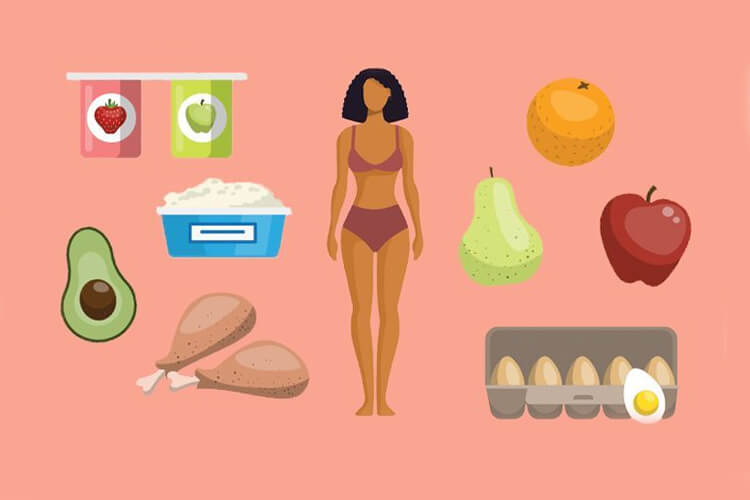
Protein is the second pillar of this equation. The 2017 position stand of the International Society of Sports Nutrition (ISSN) recommends 1.4-2.0 g of protein per kilogram of body weight per day for building and maintaining muscle in exercising individuals. For a 70 kg person, that corresponds to roughly 98-140 g of protein per day. Protein sources should be spread across the day and varied: eggs, chicken breast, fish, dairy, and legumes are commonly used options.
Carbohydrates are fuel, not an enemy, for the ectomorph. Quality carbohydrates such as oats, brown rice, potatoes, and quinoa; seasonal vegetables and fruit; and healthy fats from nuts and oilseeds form the backbone of the program. Eating meals at regular intervals every few hours provides a steady flow of energy and nutrients throughout the day. Weight gained through chips, biscuits, and sugary snacks lowers muscle quality and leads to fat accumulation around the belly; that is why “eating calories” and “eating quality calories” are not the same thing.
Which Exercises Should Ectomorphs Do?
The logic of ectomorph training is to channel energy into muscle building and limit unnecessary calorie burning. That is why resistance training, meaning weight work, is placed at the center. The American College of Sports Medicine resistance training principles are based on compound movements, gradually increasing load (progressive overload), and adequate recovery to develop muscle mass and strength.
In practice, this means giving priority to multi-joint compound movements such as squat, deadlift, bench press, pull-up, and row. These movements work many muscle groups at once and offer the highest return for the ectomorph. Training a few sets in a moderate rep range per muscle group is a common approach for both volume and muscle development.
Cardio does not need to be cut entirely, but keeping it limited and purposeful makes sense for the ectomorph; high-volume endurance work consumes the energy needed for muscle building. Leg training in particular should not be neglected: because it involves the body’s largest muscle groups, movements such as squat and deadlift support both lower-body development and overall recovery and hormonal response. Technique is critical here; learning the movement in correct form with a student’s discipline before adding load prevents injury.
The CEOtudent Framework: CEO Decision, Student Discipline
For the ectomorph, the real difference lies in one side balancing the other. The CEO side builds the system and looks at the data; the student side carries out the work with patience and correct technique. The framework below places these two roles into concrete areas.
| Area | CEO decision (measure, program, adjust) | Student discipline (learn, repeat, be patient) |
|---|---|---|
| Nutrition | Adjust the caloric surplus based on the weekly weight trend | Apply the meal and protein habit consistently every day |
| Training | Choose a program focused on compound movements and increase load gradually | Repeat each movement in correct form until you master it |
| Recovery | Place sleep and rest days on the calendar like an investment | Resist the urge to skip, treat rest as part of the program |
| Tracking | Record body weight, weights lifted, and circumference measurements | Read the results without judgment and learn the next step from them |
| Patience | Set a 12-week horizon and do not break the decision early | Accept the slowness of the first weeks as a natural part of the process |
Table: CEOtudent editorial framework.
The essence of this framework is this: a well-managed ectomorph body behaves like a well-run system. Results come not from randomly working harder, but from adjusting the right variable at the right time.
Evidence-Based Reference Points
The table below brings together the verifiable scientific anchors on the ectomorph and somatotype. These are not marketing claims but core references established in the literature.
| Topic | Verifiable fact | Source |
|---|---|---|
| Somatotype classification | Division of the body into three types (ectomorph, mesomorph, endomorph) | W.H. Sheldon, The Varieties of Human Physique, 1940 |
| Somatotype measurement | Standard numerical somatotype determination method | Heath-Carter method, 1967 |
| Protein requirement | 1.4-2.0 g/kg per day for building and maintaining muscle in exercising individuals | ISSN position stand (Jäger et al.), 2017 |
| Energy for muscle gain | Muscle gain generally requires a controlled caloric surplus (varies by person) | ISSN position stand on diets and body composition |
Table: Compiled based on W.H. Sheldon (1940), Heath-Carter (1967), and ISSN position stands.
Important Practical Points for Ectomorphs
Short and intense training. The warm-up, working sets, and stretching should be completed within a reasonable time; spending hours in the gym is no guarantee of muscle mass. Focusing a training day on a single muscle group increases efficiency.
Rest the same muscle. Allowing enough recovery time before training a muscle group again protects muscle development in the ectomorph’s slow-recovering structure. Hammering the same area on consecutive days can stall progress.
Do not go hungry. Going hungry for long periods and skipping meals leads to fast muscle loss in the ectomorph. As hard as muscle gain is, its loss is just as fast; that is why regular eating is not a preference but a necessity.
Sleep. Most of recovery happens during sleep. A poor sleep pattern largely undoes the returns of good training and nutrition.
Patience and measurement. Feeling tired even at low weights in the first weeks is normal. Make decisions with numbers; track the weight and performance trend, and use motivation not as the main source but data as the compass.
Smoking. Because of a narrow chest and low starting capacity, the negative effects of smoking may be more visible in the ectomorph; for overall health and performance, quitting is the most sensible choice.
Frequently Asked Questions
How do I know if I am an ectomorph?
If you have a thin and long structure, narrow shoulders, thin bones, and low body fat, and you struggle to gain weight and muscle despite eating a lot, you most likely have an ectomorph-dominant profile. Methods such as Heath-Carter are used for precise measurement, but in daily life these general signs are a good enough starting point.
Can an ectomorph build muscle?
Yes. Muscle gain can be slower for the ectomorph, but it is possible with a controlled caloric surplus, adequate protein, and regular resistance training. The difference lies in the discipline of managing the process like a system.
How much protein should I take per day?
The ISSN 2017 position stand recommends 1.4-2.0 g of protein per kilogram of body weight per day for exercising individuals. Your personal need can be adjusted within this range based on training intensity and your goal.
How many extra calories should I eat to gain weight?
Muscle gain requires a controlled caloric surplus, but this amount varies from person to person. Instead of memorizing an exact number, tracking your weekly weight trend and adjusting the surplus accordingly is a more reliable method.
Should an ectomorph do cardio?
Cardio is not entirely off-limits, but it makes sense to keep it limited and purposeful for the ectomorph. High-volume endurance work can consume the energy needed for muscle building, so the priority should be on resistance training.
Why is leg training so important?
The legs contain the body’s largest muscle groups. Compound movements such as squat and deadlift support both lower-body development and overall recovery and strength, which is why they are an essential part of the ectomorph program.
Is somatotype fixed or can it change?
Somatotype is a starting profile. Some traits, such as bone structure, are genetic, but muscle mass and body fat can be changed significantly through training and nutrition. In other words, being an ectomorph is not a fate but a starting point to manage.
Sources
- W.H. Sheldon, The Varieties of Human Physique, 1940
- Heath and Carter somatotype method, 1967
- International Society of Sports Nutrition position stand on protein and exercise (Jäger et al.), 2017
- International Society of Sports Nutrition position stand on diets and body composition
- American College of Sports Medicine resistance training guidelines
This content was compiled with the support of AI following in-depth research, then written and prepared for publication by the CEOtudent editorial team.
This post is also available in: