
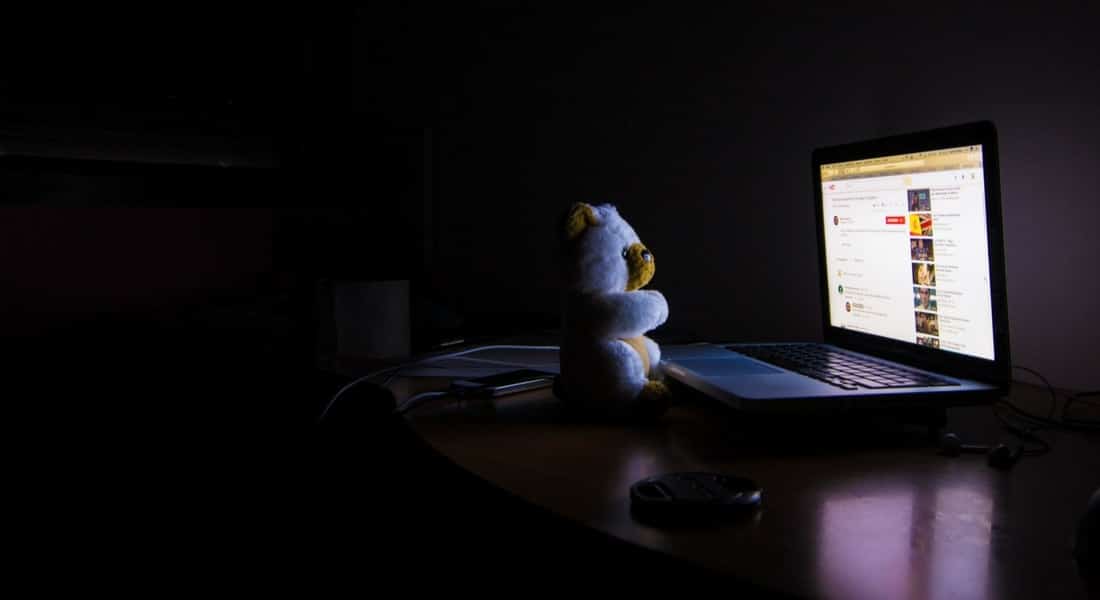
TL;DR – Quick summary: The five classic traps that sink a home-working freelancer’s output have stayed the same over the years: (1) getting lost on social media, (2) slacking off and neglecting your health, (3) overly flexible working hours, (4) undefined physical boundaries, and (5) unplanned social invitations. The only thing that has changed is the context: in 2026 the solopreneur running a one-person business now multiplies their capacity with AI tools while having to battle the same distractions more deliberately. Because AI accelerates productivity but cannot build focus on your behalf. This updated guide keeps 2018’s five time-killers, reinterprets each one with 2026 tools, compares the old freelancer routine with an AI-powered solopreneur productivity system in a single table, adds the discipline of deep work and time blocking, touches on the Turkey reality, and ends with 7 FAQs. The core idea is clear: the tools changed, the discipline stayed the same.
When you work from home, it can feel like you have all the time in the world. The comfort of your home, the cozy chairs and your own desk… It is time to shake off the illusion of unlimited hours, because, unfortunately, you don’t have that kind of freedom.
Working from home is still an indispensable blessing for most freelancers. Far from the traditional, distracting cubicle-style office, there is no reason your creativity shouldn’t flourish – right? In reality, the behind-the-scenes story isn’t quite as it appears. As productive as home can be, working from home brings its own set of distractions along with it. In 2026, another layer was added on top of this picture: artificial intelligence. Tools like Claude and ChatGPT can shave hours off a freelancer’s day; but the same tools, used wrong, can turn into an endless “just one more prompt” loop. If you’re new to all this, it’s worth first reading the what is freelance and what is a solopreneur articles.
Before you fall into the traps that scatter your attention, what you need to do is spot them and stay as far away as possible. Below we’ve listed the 5 most common time-killing activities that new entrepreneurs and people working from home run into – and we’ve updated each one with the 2026 solopreneur reality.
1) Scrolling through social media
Even if your work is related to social media marketing, you need to separate your personal social media use from your working life. Promoting a blog post you wrote and adding fresh perspectives to your content is one thing; spending half an hour looking at a relative’s vacation photos is another.
Social media is essentially designed as a giant pit that pulls people in; once you fall in, getting out becomes increasingly hard. You can easily burn an hour, or even an entire day. That’s why you should set yourself a limit for browsing social media and, once you hit that limit, get back to work.
The 2026 layer: The threat is no longer just the feed; infinite-scroll short-video algorithms (TikTok, Reels, Shorts) steal your attention far more efficiently than they did in 2018. The good news is that the same AI era has also made the solution easier. A solopreneur ties the “build in public” discipline to a content calendar, produces posts in batches (AI draft + manual editing), uploads them to a scheduling tool, and never opens the app during the day. Use social media as a “broadcast channel,” not an “escape hatch.”
2) Endless slacking off
When your workspace is just a few steps from your bed, you start neglecting your health without even noticing. Eventually, as your health begins to suffer, you’ll notice it during your working hours too.
Set aside some time for exercise every day. Even though it might look like an activity that gets in the way of work, people who exercise have been observed to get more done at their desk than those who don’t. According to research, the exercise you do during your workday can boost your time planning and task completion by up to 72%.
The 2026 layer: This data still holds, because what changed is the technology, not your biology. As AI takes over the routine part of your workload, the freed-up time should be filled with sustainability, not with more work. In a one-person business, the most fragile asset is you: if you get sick, the income stops. That’s why exercise isn’t a “luxury” but an investment in business continuity. Even a 20-30 minute daily walk, a simple routine tracked with a smartwatch, noticeably raises your focus at the desk.
3) Overly flexible working hours
The comfort that freelance work brings is a double-edged sword. You can get up whenever you like in the mornings; but if you don’t stick to a plan, this self-indulgence turns into rule-breaking too.
To get maximum output from every hour of the day, you should plan your day regularly – from the time you set aside for exercise to the hour you’ll check your emails. This doesn’t mean you’ll never deviate from the plan. But knowing there’s a plan to help you when you start getting lazy will boost your motivation.
The 2026 layer: The antidote to flexibility is time blocking. Split your day into 90-minute deep-work blocks; assign a single output to each block (for example “client delivery,” “AI content draft + revision”). A calendar app plus a simple Pomodoro turns the freedom of “I work whenever I want” into the discipline of “I produce predictably every day.” The solopreneur’s biggest rival isn’t a competitor, but unstructured time.
4) Undefined physical boundaries
Are you spending your working hours, your meals and your rest breaks at your desk? You need to break this habit. Just as you shouldn’t play on your phone before sleeping, you shouldn’t do things unrelated to work at your workspace either.
When you want to take a break, step away from your desk, watch an episode or two of a show, eat your meal in the kitchen. And when you’ve finished all your work, leave every distraction behind and return to your desk.
The 2026 layer: The physical boundary is now intertwined with the digital one. Notifications, open tabs and “always available” messaging make the physical boundary at home invisible. A single work profile (a separate browser profile or user account), a focus mode with notifications off, and a clear “work is over” ritual teach your brain where work begins and where it ends. Setting boundaries is the first step in preventing burnout.
5) Invitations from your friends
Did your friends invite you to lunch? By all means, don’t skip it. But when they invite you to the cinema at 2 p.m., think twice.
Once you start working from home, the people around you begin to assume all your time is free. If you want to do something nice with friends at a cozy café in the afternoon, plan your day around it. Use the advantage of freelance work – but be the master of your plan, not its slave.
The 2026 layer: Setting boundaries applies not only to friends but to clients too. Appearing “always available” is the solopreneur’s most expensive mistake; because deep work, once interrupted, doesn’t come back easily. Clear working hours, automatic reply messages, and a “response-time promise” (for example “I’ll get back within 24 hours”) protect both your friendships and your work.
The old freelancer routine vs. the 2026 AI-era solopreneur system
How are the same five traps managed across two different eras? Here’s the summary:
| Dimension | 2018 freelancer (the old way) | 2026 AI-era solopreneur |
|---|---|---|
| Attention threat | Social media feed | Infinite-scroll short video + flood of notifications |
| Production speed | Manual labor, output per hour | AI draft + human revision (many times faster) |
| Time management | “I work whenever I want” | Time blocking + 90-min deep work |
| Health | A neglected luxury | An investment in business continuity (72% productivity impact) |
| Boundaries | Physical (desk/room) | Physical + digital (focus mode, separate profile) |
| Biggest risk | Laziness | Burnout + the endless “just one more prompt” loop |
| Revenue model | Selling hours | Hours + a mix of packaged services / products |
The table points to a single truth: the tools grew dramatically more powerful, but what determines productivity is still discipline. AI turns a good system into a superpower; a bad system, it scatters faster.
Deep work in the AI era: the solopreneur’s hidden leverage
Artificial intelligence saves the most time on routine work: drafting, summarizing, code scaffolding, research compilation. But where you put the time you gain is what determines productivity. The smart solopreneur invests the gap AI opens up into deep work – that is, uninterrupted, highly focused, creative or strategic work. The concept of “deep work,” popularized by Cal Newport, describes exactly this: value is produced in intense focus blocks cleansed of distractions.
A practical cycle works like this: in a 90-minute deep-work block in the morning, finish the hardest task (the part that can’t be delegated to AI and requires judgment); then accelerate routine production with AI; in a second block in the afternoon, do your revision and delivery. In this rhythm, AI is an assistant, not the boss. For a broader productivity and income framework, you can check out the 22 ways to make money online and the productized service guide articles.
There is a second question beyond where you point your deep work: which direction you point it. In a one-person business, the most expensive kind of scattered is lurching toward a new trend every week. The antidote is building a defensible point of view about where your own field is going, writing down what you believe, why, and what would prove you wrong. For a framework that turns this into practice, see how to build a personal thesis; setting direction like a CEO and updating it like a student protects the solopreneur’s attention budget.
The Turkey reality: 2026 conditions for the home-working solopreneur
The number of freelancers and solopreneurs working from home in Turkey is rising every year. In 2026 there are two standout dynamics: first, the exchange-rate gap. When your costs are in liras and your income is in dollars/euros, the same productivity becomes far more profitable – which is why protecting your time directly protects your income. The freelance sites where you can earn in dollars and euros lists these channels. Second, loneliness and a lack of structure. Without the ready-made routine an office provides, you have to design the day yourself. For a solopreneur working remotely in Turkey, avoiding the five traps above isn’t just about “being productive,” it’s the foundation of building a sustainable career. To strengthen your personal visibility, the personal brand in the digital world in 6 steps article is also a good starting point.
Related Posts
- What Does Freelance Mean? What Is Freelancing?
- What Is a Solopreneur? The 2026 One-Person Company Guide
- What Is a Productized Service? The Packaged-Service Guide
- Creating a Personal Brand in the Digital World in 6 Steps
- 22 Ways to Make Money Online
- How to Build a Personal Thesis: Having a Point of View on the Future
Frequently Asked Questions (FAQ)
1. Is working from home really less productive than working in an office?
No – with the right discipline it is usually more productive. The problem isn’t the environment, it’s the lack of structure. When you avoid the five traps in this article, working from home offers higher focus than a noisy office. But making that happen takes effort and discipline.
2. Does AI boost a freelancer’s productivity, or does it distract them?
Both are possible. AI saves time by accelerating routine work; but if you slip into the “just one more prompt” loop, it eats time. The key is to use AI as a tool within specific blocks, not to leave it open all day long.
3. Is the effect of exercise on productivity really proven?
Research shows that exercise done during the workday can deliver up to 72% improvement in time planning and task completion. In a one-person business, health means business continuity directly.
4. How exactly do you apply time blocking?
Split your day into 60-90 minute blocks, assign a single output to each block, turn off notifications, and don’t move to another task until the block ends. Put the hardest task in the freshest hour of your day.
5. Should I quit social media entirely?
No; especially for a solopreneur building a personal brand, social media is a distribution channel. The solution is to use it deliberately as a production tool – produce content in batches, schedule it, and don’t open the app during the day.
6. Does not appearing “always available” to clients lose me work?
Usually the opposite. A clear response-time promise (e.g. 24 hours) and a regular schedule signal professionalism and protect deep work. Constant interruption lowers both quality and delivery speed.
7. For someone working from home in Turkey, which trap is the most critical?
The lack of structure. Since there’s no ready-made office routine, flexibility turns into laziness if you don’t design the day yourself. Time blocking and clear boundaries minimize this risk.
References
- Cal Newport, Deep Work: Rules for Focused Success in a Distracted World, Grand Central Publishing, 2016.
- Entrepreneur Media – guide content published on working-from-home productivity (general reference; source of the original article).
- World Economic Forum, “Future of Jobs Report 2025” – trends in remote and independent work.
- OECD, “The Future of Work” – analyses of the platform economy and flexible work.
- ILO (International Labour Organization) – reports on remote and independent work (general reference).
- TÜİK (Turkish Statistical Institute) – data on remote/flexible work and household labor force in Turkey (general reference).
This post is also available in:














)
&description=&image=https://ceotudent.com/wp-content/uploads/2021/07/d8ppfn-1024x559.jpg)