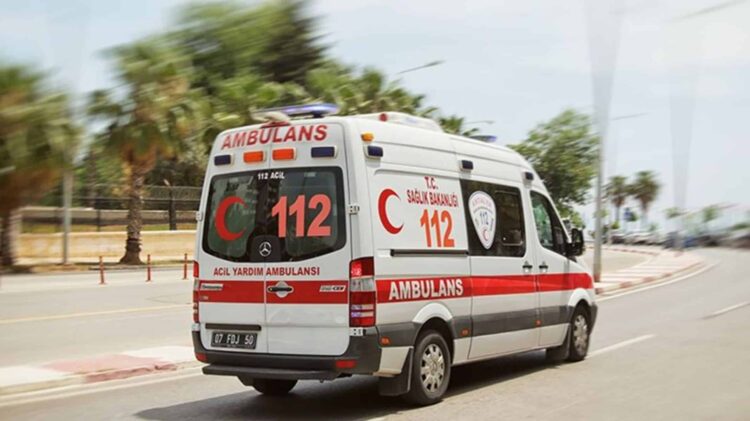
What an EMT does is a question that comes up more often as interest in healthcare grows. EMT stands for Emergency Medical Technician. In the simplest terms, an EMT is a certified pre-hospital care provider trained for emergencies, the first to reach the scene and the one who makes sure patients and casualties are moved safely to a medical facility. At the same time, the EMT begins basic medical intervention at the scene, responds to emergency calls, and reports the patient’s condition accurately to the team.
This article does more than describe the profession. It gathers an EMT’s duties into a competency map, offers a clear comparison that separates the role from a paramedic and a physician, and explains why this work has not been automated in the age of artificial intelligence. In the end, it looks at how to manage this profession as a career with CEO discipline and keep it current with a student’s curiosity.
TL;DR
- EMT stands for Emergency Medical Technician: a certified pre-hospital care provider who first reaches the scene of an emergency, begins basic life support, and transports the patient safely.
- In most systems, EMT certification requires completing a state-approved EMT course and passing the National Registry (NREMT) cognitive and skills exams. The tiered ladder runs EMT to Advanced EMT (AEMT) to Paramedic, the highest pre-hospital level, which requires far more training, and then physician.
- The difference between an EMT and a paramedic or physician is the scope of practice: as the level of training rises, so does the range of interventions that can be performed.
- Artificial intelligence, telemedicine, and decision-support systems are increasingly used in emergency care; but the rapid judgment, manual skill, and human contact at the scene are not being automated. The EMT works in exactly this human-dependent layer.
- The way to advance the profession is to own your career (CEO) and continually refresh your certifications and skills (student).
What Does an EMT Do?
The EMT’s job is critical for both public health and individual survival, because the first minutes gained in an emergency shape the outcome. An EMT usually works as part of an emergency medical services (EMS) team and is responsible for reaching the person in need quickly and on time. In an accident, disaster, injury, or sudden illness, the first team to reach the scene often includes an EMT.
The duties cannot be reduced to a single task; they form a set of complementary competencies. The table below gathers scattered task definitions into a single competency map. This is an editorial framework built to make the work in the field easier to understand.
EMT Competency Map (CEOtudent editorial framework)
| Competency area | What it means in the field | Why it is hard to automate |
|---|---|---|
| Rapid assessment (triage) | Deciding within seconds at the scene who is treated and in what order | It is a judgment call made under pressure with uncertain, incomplete information |
| Basic and advanced life support | Supporting breathing and circulation, applying the necessary basic interventions | Requires physical manual skill and real-time adaptation |
| Safe transport | Moving the patient to the appropriate center without worsening their condition | The environment, traffic, and patient status differ every time |
| Communication and handoff | Reporting the situation to the team and hospital staff accurately and completely | It is a handoff that requires human trust and clarity |
| Composure and empathy | Managing the patient and their relatives in a moment of panic | Emotional intelligence and human contact cannot be handed to a machine |
Every row in the table also explains why the profession stays valuable: the essence of the work is not repeating a standard procedure, but reading a situation that is different every time and making the right call quickly.
EMT, Paramedic, and Physician: Do Not Confuse the Roles
Different titles on an emergency care team correspond to different levels of scope. Clarifying the three most commonly confused roles matters both for those choosing the profession and for those receiving care.
| Role | Education/certification path | Scope of practice |
|---|---|---|
| EMT (Emergency Medical Technician) | State-approved EMT course, then passing the National Registry (NREMT) cognitive and skills exams | Basic life support and transport; first intervention at the scene |
| Paramedic | Far more extensive paramedic training beyond the EMT and AEMT levels, with its own certification and registry exams | Broader; can include a wide range of advanced pre-hospital interventions |
| Physician | Medical school | Widest; full authority to diagnose and treat |
This tiered structure shows that the profession is not a dead end but a path you can advance along. Someone who starts as an EMT can move up to Advanced EMT and paramedic with further training, and from there toward other healthcare careers. Seeing the career as a ladder is the core idea of this article.
Emergency Care in the AI Era: Why This Profession Stays Human-Dependent
Healthcare is one of the fields most affected by artificial intelligence. Telemedicine, wearable sensors, call-prioritization algorithms, and decision-support systems are increasingly embedded in the background of emergency services. But there is a critical distinction here: AI processes information, while the EMT moves through the physical world and within human contact.
An algorithm can help interpret a heart rhythm, but it cannot reach the injured person inside an overturned vehicle and extract them safely, cannot calm a panicking relative, cannot prioritize within seconds on an ambiguous scene. This layer of the work is exactly the layer of judgment, manual skill, and human trust that the machine cannot take over. That is why emergency care remains one of the professions that technology surrounds but continues to place the human at the center.
This is where managing yourself like a CEO becomes clear: owning your career, tracking which skills are gaining value, and never stopping learning. For an EMT, that means taking regular refresher training, keeping advanced life support certifications current, and learning to use technology as a tool rather than a rival. What makes the work most resistant to automation is precisely this continually learning student attitude.
FAQ
What does EMT mean and what is it short for?
EMT is short for Emergency Medical Technician. It describes the certified pre-hospital care provider who first reaches the scene in emergencies, begins basic life support, and transports the patient safely to a medical facility.
What training is required to become an EMT?
In most systems, the EMT title is earned by completing a state-approved EMT course and passing the National Registry (NREMT) cognitive and skills exams. The next level up, paramedic, requires far more extensive training with its own certification and registry exams.
What is the difference between an EMT and a paramedic?
The main difference is the level of training and the resulting scope of practice. A paramedic, with much more extensive training, can hold a far broader intervention scope, while an EMT works with a focus on basic life support and transport. Both are inseparable parts of the emergency team.
Will artificial intelligence eliminate the EMT profession?
No, but it will transform it. AI will be used more and more in call prioritization and decision support, but the physical intervention at the scene, rapid judgment, and human contact cannot be handed to a machine. The value of the profession lies precisely in this human-dependent layer.
How can I advance my EMT career?
Think of the career as a ladder: you can move up to Advanced EMT and paramedic with further training, keep your certifications current, and over time move toward different healthcare fields. Continuing to learn is what makes the profession both secure and satisfying.
Sources
- National Registry of Emergency Medical Technicians (NREMT), public information on EMT and paramedic certification levels and examination requirements.
- World Health Organization (WHO), general assessments of emergency care systems and the role of pre-hospital care.
- International Labour Organization (ILO), general frameworks for the classification and task definitions of health and emergency response occupations.
- U.S. Bureau of Labor Statistics, general occupational overview of EMTs and paramedics, including role descriptions and typical duties.
This content was compiled with the support of AI following in-depth research, then written and prepared for publication by the CEOtudent editorial team.
This post is also available in: