TL;DR: Keeping an agenda is not, as most people assume, a show of discipline or an aesthetic hobby. At its best it is the smallest tool for running yourself like an organization: a personal operating system that records your attention, your time, and your intentions instead of leaving them to the unreliable hand of memory. A CEO does not run a company from memory; a student does not learn without measuring progress. The agenda unites the two. But whether an agenda works has nothing to do with filling pages and everything to do with getting four mechanisms right: binding intention to a time and place, recording where your time actually goes, offloading unfinished work from your mind onto paper, and running a regular review loop. This piece gives you those mechanisms and an original scorecard that measures whether any planning system fits you. Its goal is not to sell a habit, but to help you run your life like a CEO and learn from it like a student.
Why an agenda is an operating system, not decoration
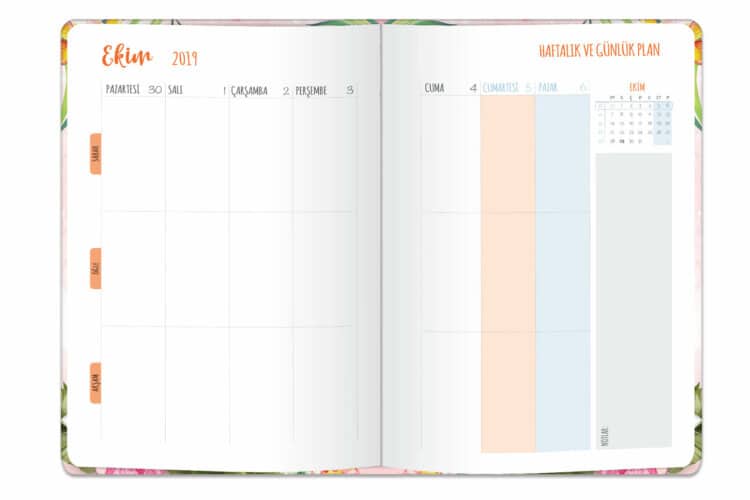
Most people frame the agenda wrong. They either see it as a to-do list, a place to write down tasks, or as a motivational object, a pretty notebook with the feel of a fresh start. Both are incomplete. An agenda does what any organization’s operating system does: it records where decisions, commitments, and resources go, so that nothing has to live in memory alone.
This distinction matters because memory is a weak management tool. The mental picture you trust of what to do and when, where your hours go, and which commitments you made is systematically wrong; it inflates the interesting work, forgets the routine, and makes future time look more abundant than it is. Peter Drucker’s classic observation was exactly this: effective people start not from their tasks but from their time, and they record where it goes before trying to manage it, because no one remembers their own week accurately.
The agenda is the tool that keeps that record. When you see it not as decoration or a source of guilt but as the dashboard from which you run yourself, the question of whether you filled it in gives way to a far better one: is this system actually helping me make better decisions? This is where the CEO-plus-student lens comes in. The CEO side wants the plan and the review; the student side asks what each kept record taught you.
The four mechanisms that make an agenda work
Whether an agenda works has nothing to do with the brand of notebook or the colored pens. It has to do with whether you have set up four scientifically grounded mechanisms. The table gathers them and why they work.
| Mechanism | What it does in the agenda | Why it works (source) |
|---|---|---|
| Implementation intentions | Binds an intention to a specific time and place: “At 9 a.m., at my desk, I will do X” | Peter Gollwitzer’s research shows intentions pre-committed as “when and where” are markedly more likely to be acted on than merely setting a goal |
| Time recording | Writes down where your hours actually go rather than guessing | Drucker, The Effective Executive: management begins with recording where time goes, because memory is unreliable |
| Mental offloading | Moves unfinished work out of the mind into a trusted place | The Zeigarnik effect: unfinished tasks create persistent mental tension; bound to a plan, that tension eases (Masicampo and Baumeister, 2011) |
| Review loop | Weekly or daily, assesses what is working and what must change | Locke and Latham’s goal-setting theory: progress feedback is required for goals to drive performance |
Table: the sources are named academic works; the framing that unites them as a personal operating system is a CEOtudent editorial synthesis.
Note that all four work whether you use pen and paper, a digital calendar, or an app. The tool debate is usually a distraction. What matters is whether the tool you choose makes these four mechanisms easy. If an agenda supports them, it works; if it merely looks nice while failing to bind intention to time, record time, offload the mind, and hold a review, it is an expensive notebook.
The CEOtudent Planning System Fit Scorecard
Every planning method on the market (bullet journal, digital calendar, time blocking, paper agenda) is sold to you as the “right” one. The truth is that the right method is the one that fits your life and the four mechanisms. The original CEOtudent framework below lets you score any system you are considering across five factors, for a total out of 25.
| Factor | Question | 0 to 5 scale |
|---|---|---|
| Friction | How fast and easy is it to capture an intention or task? | 0 = laborious, 5 = nearly instant |
| Visibility | Can you see your day and commitments at a glance? | 0 = scattered, 5 = clear in one view |
| Intention binding | Does the system make it easy to tie tasks to a specific time and place? | 0 = list only, 5 = time and place natural |
| Review | Does the system hold a regular weekly or daily review? | 0 = none, 5 = loop built in |
| Sustainability | Can you keep this up even in a busy week? | 0 = dropped on the first stressful day, 5 = survives under strain |
Table: The CEOtudent Planning System Fit Scorecard, an editorial framework. Scores are a judgment aid, not a measurement.
Interpreting it is simple: 19 to 25 means the system fits you, so commit to it and stop tinkering; 12 to 18 means it works but one or two factors (usually review or friction) need strengthening; below 12 means the system is working against you, so change the method by targeting the lowest-scoring factor. What most people call “I can’t keep an agenda” is rarely a willpower problem; it is a low sustainability or a high friction score, and both are solved by changing the tool.
Making an agenda work this week
Set theory aside and get concrete. First, for one week do nothing but time recording: jot a single line whenever you finish a repeatable task, noting roughly how long it took. The aim is not accounting precision but seeing where your hours actually go, which is almost always different from what you assumed. This is the CEO side of running yourself: start from data.
Second, the following week, bind only three important tasks to a time and place. Not “I should write the report” but “Tuesday at 9:00, at my desk, first draft of the report.” This is the mechanism Gollwitzer’s research points to, and it is far more powerful than merely setting a goal. Third, offload the unfinished work gnawing at your mind into the agenda, even if you will not work on it yet; binding it to a trusted place eases the Zeigarnik tension and frees your attention.
Fourth and most important: once a week, run a fifteen-minute review. Look at what worked, what slipped, and what you will change next week. This is the student side of running yourself; it turns each kept record into a lesson for designing a better next week. The real payoff of keeping an agenda is not in filled pages but in this loop: plan like a CEO, review like a student, and make sure you run the system rather than the system running you.
Frequently asked questions
Paper agenda or digital app, which is better?
The right answer is whichever supports the four mechanisms with the least friction for you. Paper offers better recall through the act of writing and fewer distractions; digital offers reminders, recurring tasks, and access from anywhere. Both can bind intention to time, record time, offload the mind, and hold a review. Apply the scorecard to each and pick the one that scores higher on sustainability and friction; the “right” tool is the one you are still using three months later.
I have started and quit keeping an agenda many times. What is wrong?
It is almost always system design, not willpower. Quitting usually comes from two factors: friction is too high (capturing is laborious, so you do not) or there is no review loop (the agenda gives no feedback, so it feels like a dead list). Find the lowest-scoring factor on the scorecard and fix only that. Often a single change (a simpler tool or a weekly fifteen-minute review) breaks a years-long “I can’t keep an agenda” cycle.
If I plan everything, won’t I kill spontaneity?
No, the opposite. A good agenda actually frees the rest of your time by binding what matters to a time. An unplanned day looks free on paper but in practice is full of the mental noise of unfinished work. When you offload commitments into a system, your mind is relieved of the burden of remembering them and can turn more fully to the present moment or a spontaneous opportunity. Structure is not the enemy of spontaneity; it makes room for it.
How detailed should I plan?
At least enough to run the four mechanisms; at most as much as you can sustain. The common beginner mistake is over-planning: a system that blocks every minute, collapses at the first disruption, and breeds guilt until it is abandoned. Instead bind three important tasks a day to a time, leave the rest flexible, and adjust the level of detail in the weekly review. A sustainable rough plan always beats a perfect plan that is abandoned.
Sources
- Peter M. Gollwitzer. Implementation Intentions: Strong Effects of Simple Plans. American Psychologist, 1999. On how binding an intention to a specific time and place raises the likelihood of acting on it compared with merely setting a goal.
- Peter F. Drucker. The Effective Executive. Harper and Row, 1966. On how running yourself begins with recording where time goes, and on memory being an unreliable witness.
- E. J. Masicampo and Roy F. Baumeister. Consider It Done! Plan Making Can Eliminate the Cognitive Effects of Unfulfilled Goals. Journal of Personality and Social Psychology, 2011. On how binding unfinished tasks to a plan eases persistent mental tension.
- Edwin A. Locke and Gary P. Latham. A Theory of Goal Setting and Task Performance. Prentice Hall, 1990. On how progress feedback is required for goals to drive performance.
- Bluma Zeigarnik. On Finished and Unfinished Tasks. Psychologische Forschung, 1927. On how unfinished tasks are held in the mind more persistently than finished ones (the Zeigarnik effect).
This content was compiled with the support of AI following in-depth research, then written and prepared for publication by the CEOtudent editorial team.
This post is also available in: