
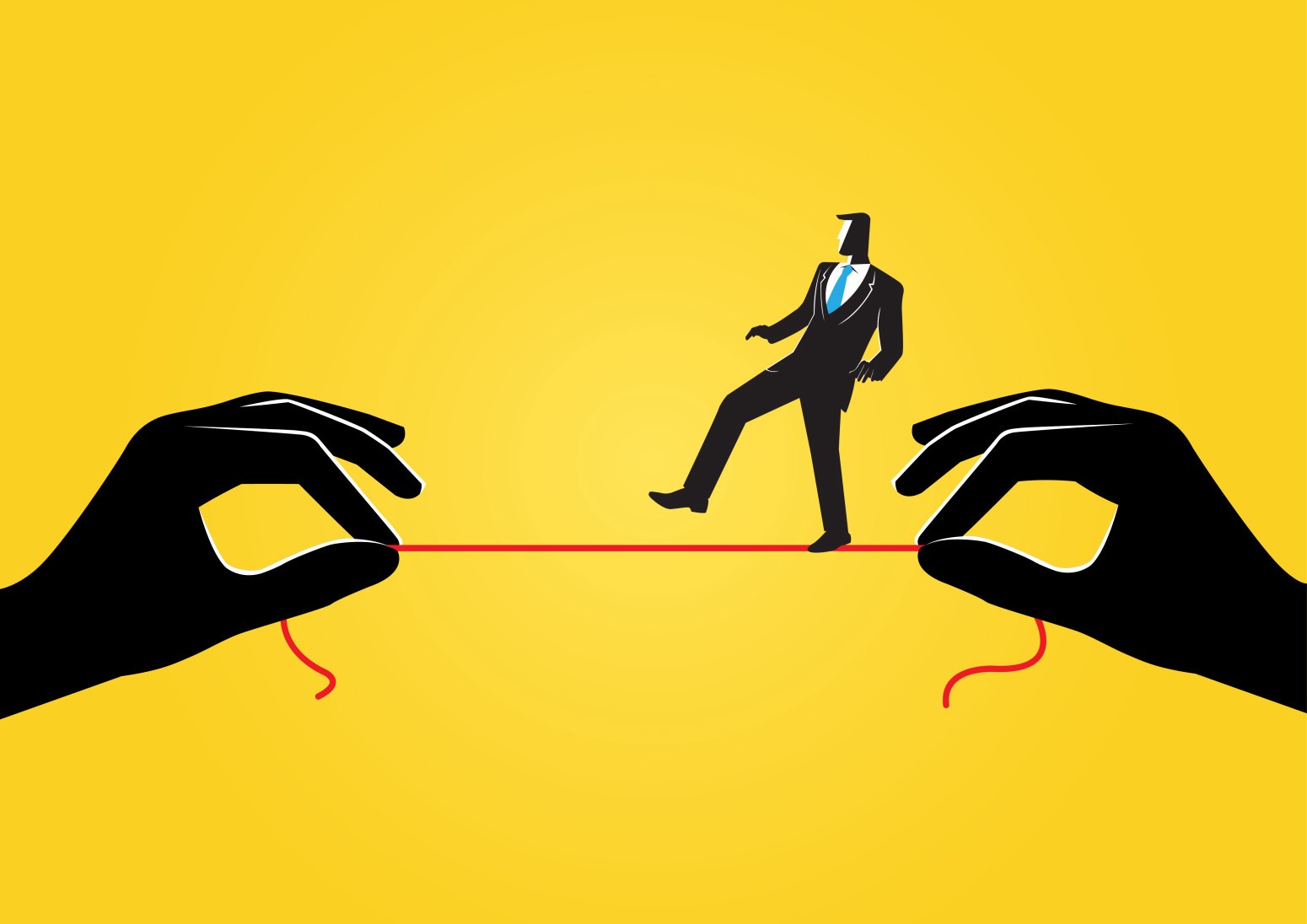
TL;DR: “Negative energy” may sound mystical, but there is solid science behind it: emotions spread between people automatically. One person’s constant complaining, anxiety, or anger pulls down your own mood without either of you noticing. The good news is that this process can be managed. Dealing with negative people is not about fixing them, it is about protecting your own energy. That takes not a single tactic but a set of strategies that shift with the situation, from setting boundaries to listening with empathy, from creating distance to understanding what triggers someone. Manage your energy like a CEO, allocating it as a scarce resource, but stay curious like a student, seeking to understand the source of the negativity before you react to it.
Everyone has someone in their life who drains their energy. A coworker who complains constantly, an acquaintance who turns every conversation into a drama, or a family member who leaves you feeling depleted the moment you walk away. This feeling is not imagined. And how you handle it directly affects both your mental health and your day-to-day output.
Most people swing to one of two extremes: they either swallow the negativity silently and burn out from the inside, or they explode and damage the relationship. There is a third, smarter path: read the situation and choose the right strategy.
First, the science: why negativity really is “contagious”
The reason to take this seriously is that emotional contagion is a proven phenomenon. Research by psychologists Elaine Hatfield, John Cacioppo, and Richard Rapson shows that people unconsciously mimic the facial expressions, tone of voice, and posture of those around them, and in doing so absorb their emotions as well. In other words, someone else’s bad mood literally rubs off on you.
This effect does not stop between two individuals; it spreads through networks. Large-scale social network research by Christakis and Fowler found that emotional states such as happiness can spread through a social network up to several degrees of connection. Emotions are contagious, and over time the people around you shape your emotional baseline.
This is the foundation of the CEO mindset: the emotional environment around you is not an accident, it is a system that needs to be managed. Who you spend time with, and how much, is a strategic decision about how you allocate your energy.
Ten strategies, one framework
The problem is that a single piece of advice like “set a boundary” or “lead with empathy” does not fit every situation. The right strategy for a coworker who complains constantly is not the same as the right strategy for an acquaintance who is an outright energy vampire. The framework below organizes the ten strategies by which one works in which situation.
The Negative-Energy Playbook (CEOtudent editorial framework)
| Strategy | When to use | Why it works |
|---|---|---|
| Understand the trigger | Before you judge someone outright | Negativity is often a sign of fear or stress |
| Listen with empathy | When the person is genuinely going through a hard time | Being heard lowers defensiveness |
| Create emotional distance | With constant, chronic negativity | Cuts off contagion mentally rather than physically |
| Draw a clear boundary | When your energy is regularly depleted | A boundary protects the relationship’s source, not the relationship itself |
| Redirect the conversation | When a complaint loop starts | You set the frame of the conversation |
| Steer toward solutions | When the person is actually looking for one | Turns complaint into action |
| Avoid taking it personally | When the negativity seems aimed at you | Most of the time, it is not about you |
| Reduce exposure | When the relationship is optional | Time is your scarcest resource |
| Nurture positive environments | For overall resilience | Supportive relationships restore balance |
| Protect your own routine | As a baseline in every situation | Your own energy is your first line of defense |
The logic of the framework is simple: read the situation first, then choose the tool. For a friend going through a rough patch, empathetic listening is the right tool; for chronic, unchanging negativity, emotional distance and a boundary are more appropriate. Applying the same approach to the same person every time is the mistake most people make, and it is what wears them out.
Setting a boundary is not guilt
Of all these strategies, boundary-setting is the hardest one for most people, because they mistake it for selfishness. In reality, a boundary is not about ending the relationship, it is about making it sustainable. A CEO does not distribute their most valuable resource without limit; they choose where and how much to invest. Your time and your emotional energy are exactly that kind of resource.
Setting a boundary in practice is plain and does not require drama. Saying “I don’t have the energy to talk about this right now” is a boundary. Ending a conversation politely but firmly is a boundary. Physically stepping away from a persistently negative environment is a boundary. A boundary is not a loud announcement, it is a quiet choice.
In a work context, psychological detachment comes into play: being able to genuinely disconnect your mind from work and workplace tensions at the end of the day is one of the strongest protections against burnout. If you leave a negative environment but carry it home in your head, you lose half the benefit of the distance you created.
The student’s curiosity: understand before you react
The CEO side protects your energy; the student side tries to understand. Most negative behavior is not malice, it is the outward expression of unresolved stress, fear, or insecurity. Seeing this does not make you a rescuer, but it does protect you from getting hurt unnecessarily.
Approaching with curiosity means asking “Why is this person like this?” as a genuine question rather than a judgment. The answer is usually not about you. That realization is what lets you stop taking negativity as a personal attack, and it is precisely the mental step that cuts off emotional contagion most effectively.
You cannot change negative people. But you fully control how you react to them, how much room you give them, and how you protect your own energy. Whoever builds that system stays balanced even around the most difficult people.
Frequently Asked Questions
Is negative energy a real thing, or just an excuse?
It is a real phenomenon. Research on emotional contagion shows that people unconsciously absorb the emotions of those around them. Someone else’s bad mood measurably affects your own.
Doesn’t setting a boundary with a negative person hurt them?
Setting a boundary is not an attack. It makes the relationship sustainable rather than ending it. A clear, courteous boundary is usually far healthier than resentment that builds up silently over time.
Empathy or distance, which is right?
It depends on the situation. Empathetic listening works for someone going through a temporary hardship; emotional distance is more appropriate for chronic, unchanging negativity. Choosing the right tool starts with reading the situation.
How do I deal with a negative work environment?
Protect your own routine, mentally disconnect from work at the end of the day, and reduce your exposure to the interactions that drain you the most. You may not be able to change the environment on your own, but you can manage your own response.
Should I cut these people out of my life?
Not always. If the relationship is optional, reducing exposure is reasonable; if it is not (family, work), choosing a strategy and setting a boundary is more realistic.
Sources
Elaine Hatfield, John Cacioppo, and Richard Rapson, research on emotional contagion
Nicholas Christakis and James Fowler, studies on the spread of emotion in social networks
Established literature in occupational psychology on psychological detachment and recovery
This content was compiled with the support of AI following in-depth research, then written and prepared for publication by the CEOtudent editorial team.
This post is also available in: