
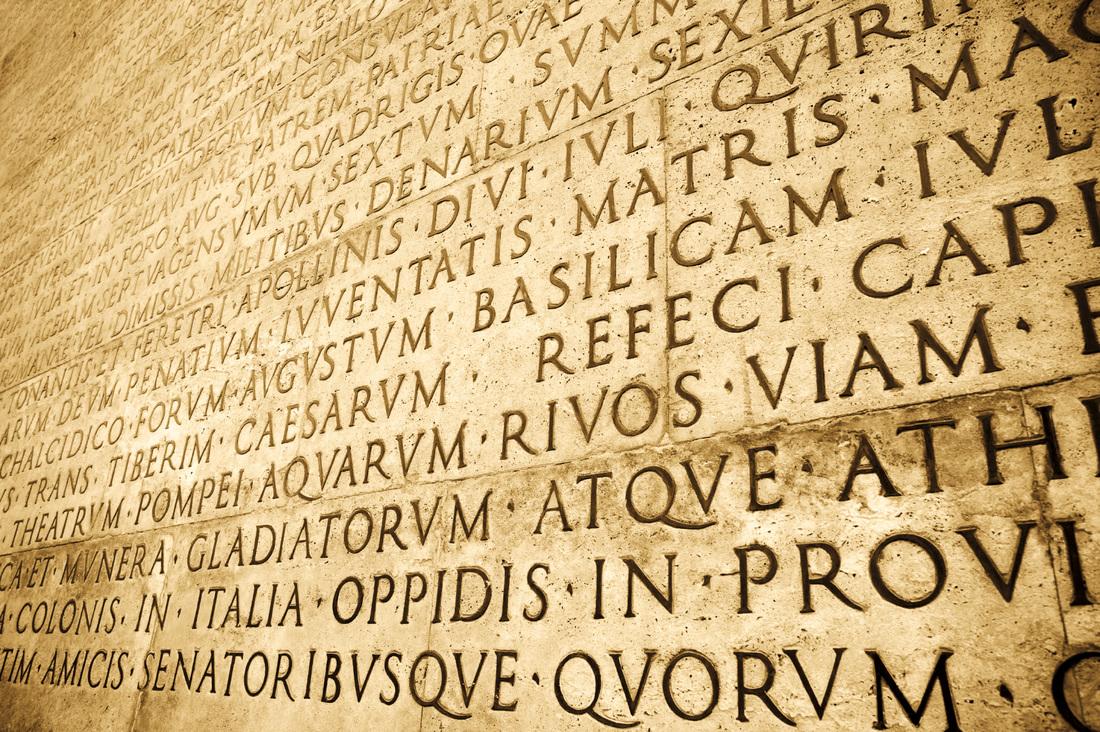
TL;DR — Quick summary: Latin sayings are the distilled form of more than 2,000 years of cultural memory. From Horace’s carpe diem to Virgil’s fortes fortuna juvat to Seneca’s Stoic labor omnia vincit, these phrases still guide modern work life on leadership, decision-making, patience, and persistence. This guide keeps 25 important Latin sayings in their original order, adding the source author, modern workplace application, and psychological background for each. At the end you will find a thematic classification table for all 25, a 7-item FAQ, and a verifying source list.
When it comes to saying a lot with few words, Latin sayings are among the first that come to mind. The Latin words that have come down to us from ancient times still contain thoughts from which we can draw great lessons.
Watch the speeches of successful figures and you will find many of them quoting these phrases. There is also this saying:
Quidquid latine dictum sit, altum viditur.
(Anything said in Latin sounds profound.)
Latin’s impact does not come merely from its “weighty” presence. Most of these sayings have come down through the schools of Roman poets and orators, through the decision-making culture of the Imperium Romanum, through Stoic philosophy, and through Christian theology. Behind Steve Jobs’s famous Stanford “stay hungry, stay foolish” lies the same cultural vein as “memento mori” and “memento audere semper.” Memorizing the sayings is less useful than understanding their sources and contexts — this is what serves work, leadership, and personal growth.
25 Latin Sayings — Meaning, Source, Application
1) Ipsa scientia potestas est
(Knowledge alone is power.)
Source: Francis Bacon, Meditationes Sacrae, 1597. Spread to the modern world from Bacon’s Latin text, this is the manifesto of “data-driven decision making” before the term existed.
2) Materiam superabat opus
(Craft surpasses the material.)
Source: Ovid, Metamorphoses, Book II. The value of a work lies not in raw material but in workmanship. An antique ancestor of Apple’s “design over materials” philosophy.
3) Audere est facere
(To dare is to do.)
Source: Ancient Roman motto; also the crest of Tottenham Hotspur. Used to break through decision paralysis.
4) Ex falso sequitur quodlibet
(From a false premise, any desired conclusion follows.)
Source: Latin formalization of Aristotelian logic; Principia Logica. You cannot reach a true conclusion from a false premise — the bedrock of modern scientific method.
5) Fortes fortuna juvat / Audaces fortuna adiuvat
(Fortune favors the bold.)
Source: Virgil, Aeneid, Book X. “Fortune stands beside the bold” — one of the principal slogans of entrepreneurial culture.
6) Festina lente!
(Make haste slowly!)
Source: Emperor Augustus’s motto. Combines speed with attention. Today, the ancient ancestor of “deep work”: if you want fast results, think calmly first.
7) A bove ante, ab asino retro, a stulto undique caveto
(Beware the ox in front, the donkey behind, and the fool on every side.)
Source: Drawn from Roman folk-wisdom compilations. The antique formulation of risk management: every actor is dangerous at a particular angle; learn the angle.
8) Labor omnia vincit
(Work conquers all.)
Source: Virgil, Georgics, Book I. The motto of the U.S. state of Oklahoma. Disciplined, sustained effort prevails — aligns directly with psychology’s “grit” research.
9) Nemo enim est tam senex qui se annum non putet posse vivere
(No one is so old as to believe they will not live one more year.)
Source: Cicero, De Senectute. From perhaps the deepest ancient treatise on aging and future-investment. A cornerstone of the philosophy of lifelong learning.
10) Stultum est timere quod vitare non potes
(It is foolish to fear what you cannot avoid.)
Source: Publilius Syrus, Sententiae. Ancestor of the Stoic principle “let go of what you cannot control.” The core logic of modern Cognitive Behavioral Therapy (CBT) emerges from this saying.
11) Corvus oculum corvi non eruit
(A crow does not peck out another crow’s eye.)
Source: Compilations of Roman proverbs. The common-sense observation that members of the same interest group will not harm each other; ancestor of “elite cohesion” in political economy.
12) Flamma fumo est proxima
(Where there is smoke, there is fire.)
Source: Plautus, Curculio, 2nd century BC. An antique folk-wisdom version of evidence-based thinking.
13) Fraus latet in generalibus
(Generalities are pregnant with error.)
Source: Roman legal maxim, Corpus Juris Civilis. The importance of detail. Modern debates around Simpson’s paradox in statistics are this maxim’s practical heir.
14) Adversus solem ne loquitor
(Do not speak against the sun — do not argue what is plain.)
Source: Cicero, Academica. A reminder that fighting over the obvious wastes time. In modern decision theory, the principle of “choose your source of controversy.”
15) Ab uno disce omnes
(From one, learn all.)
Source: Virgil, Aeneid, Book II. The ability to see the lesson a single example offers for an entire class — a prerequisite of critical thinking.
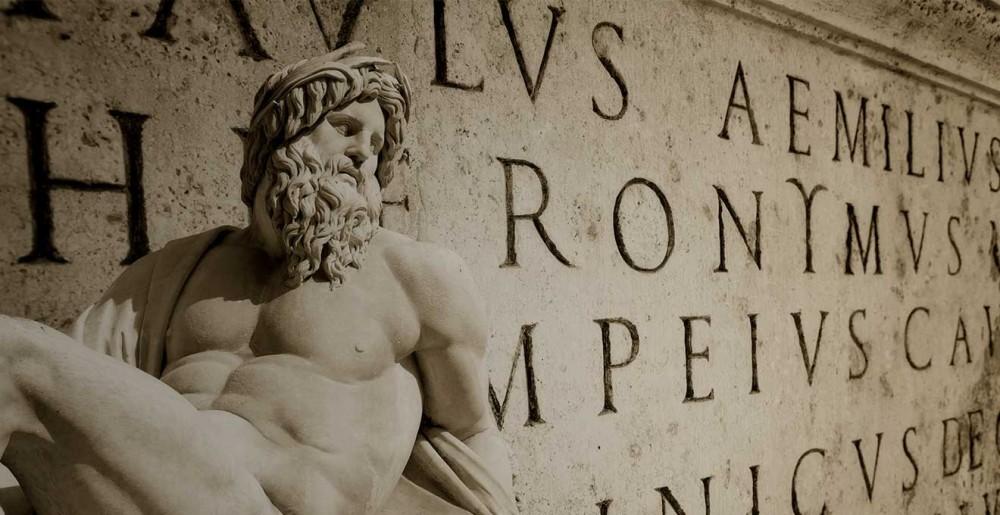
16) Aut disce aut discede
(Either learn or leave.)
Source: Traditional Latin educational motto; also Winchester College’s motto. A stern pedagogic counsel that one who does not keep learning should leave an institution.
17) Bonitas non est pessimis esse meliorem
(Being good does not mean being better than the worst.)
Source: Seneca, Epistulae Morales. A reminder of how cheap comparative morality is — “I am less bad than others” is not a good moral defense.
18) Contraria contrariis curantur
(Opposites cure opposites.)
Source: A Latin formulation from Hippocratic medicine. The ancient principle of therapy: fever is brought down with cold, not heat. The antique forerunner of “dialectical thought” in modern therapy.
19) Docendo discimus
(By teaching, we learn.)
Source: Seneca, Epistulae, Letter 7. The teaching process teaches the teacher more than the student — an antique form of Richard Feynman’s “Feynman Technique.”
20) Gutta cavat lapidem non vi, sed sæpe cadendo
(Water hollows the stone not by force, but by falling often.)
Source: Ovid, Epistulae Ex Ponto, Book IV. Repeated small efforts create vast transformations. The ancient formulation of the core idea of James Clear’s Atomic Habits.
21) Humanius est deridere vitam quam deplorare
(It is more human to laugh at life than to lament it.)
Source: Seneca, De Tranquillitate Animi. The teaching that Stoic acceptance and humor are a moral stance.
22) Increscunt animi, virescit volnere virtus
(The spirit grows; virtue thrives through wounds.)
Source: Furius Antias, ancient Roman poet. The antique ancestor of “post-traumatic growth.” It is not the wound but one’s attitude toward it that builds character.
23) Ira furor brevis est
(Anger is brief madness.)
Source: Horace, Epistulae, Letter 1. The Stoic observation that anger is a temporary loss of reason — perfectly aligned with modern emotion-regulation literature.
24) Memento audere semper
(Always remember to dare.)
Source: Gabriele D’Annunzio adapted it to Latin as the motto of the MAS torpedo squadrons. “Always be bold,” used precisely when prudence threatens to surrender strategic advantage.
25) Memento mori
(Remember you are mortal.)
Source: The phrase whispered behind Roman generals during triumphs. Steve Jobs alluded to it directly in his Stanford address. A central principle of Stoic philosophy: remembering death sharpens your immediate priorities.
Thematic Classification of the 25 Sayings
The table below groups the 25 sayings by theme and offers practical guidance on when to use them:
| Theme | Sayings | When To Use |
|---|---|---|
| Courage & initiative | 3, 5, 24 | Launching a new project; decision paralysis |
| Persistence & discipline | 8, 20 | Long-term goal focus; on tired days |
| Knowledge & learning | 1, 9, 15, 16, 19 | Career planning; mentor selection; team education |
| Stoic reason & emotion regulation | 10, 17, 21, 23, 25 | Decision-making under stress; conflict resolution |
| Intuition & risk perception | 7, 12, 13 | Risk assessment; reporting; evidence gathering |
| Speed-attention balance | 6 | Sprint management; deadline preparation |
| Resilience & post-traumatic growth | 22 | Recovery after failure; coaching |
| Logic & critical thinking | 4, 14, 18 | Debate; argument construction; problem solving |
| Systems & social dynamics | 11 | Stakeholder analysis; coalition building |
| Mortality & meaning | 25 | Career pivot decisions; life-priority evaluation |
| Action-oriented decision | 2 | Production, design, art processes |
How to Use Latin Sayings in Modern Life
The effective use of these phrases is not “sprinkling them into conversation” but calling them to mind at the moment of decision. For example:
- A team lead saying “festina lente” before sprint planning kicks off a two-hour deep-thinking block before the rapid scheduling itself.
- A startup founder writing “memento mori” on the first page of a daily journal keeps the five-year backward-look (premortem) perspective in mind, not just year-end targets.
- A student’s reminder under exam stress, “stultum est timere quod vitare non potes,” redirects the mental energy spent on uncontrollables back to controllable preparation.
As of 2026, this practice is corroborated by research on “implementation intention” and “if-then planning” in psychology: a short, memorized line that arrives at the right moment can produce behavioral change.
Frequently Asked Questions
1. Is Latin still spoken?
Officially it is the diplomatic language of the Vatican; no society speaks it as a native tongue. But law, medicine, biology, philosophy, and theology actively use it for terminology. Some classicists and several university clubs run Latin conversation groups.
2. How do I verify the sources of these sayings?
Loeb Classical Library (Harvard), the Oxford Classical Dictionary, and the Perseus Digital Library (Tufts University) are the most reliable. In Turkish, the translations of Akşit Göktürk and Bedrettin Tuncel are competent references.
3. Why isn’t “carpe diem” on this list?
The list deliberately chose 25 sayings with less name-recognition but high depth; carpe diem deserves an article of its own. Horace’s original, in Carmina 1.11, is “carpe diem, quam minimum credula postero” (“seize the day, trusting tomorrow as little as possible”).
4. How do I use Latin sayings at work without overdoing it?
Explain a single saying in the context of a decision in depth — that is more effective than stacking five citations one after another. Place it at the edge of the conversation, not its center; explain what it represents, and adapt it to the present situation.
5. Which saying is most critical for leadership?
“Festina lente” (Augustus) is at least doubly useful: it covers both speed (decisiveness) and attention (analysis). The ancient ancestor of Jim Collins’s “Disciplined People, Disciplined Thought, Disciplined Action” trio.
6. Is “memento mori” pessimistic?
No. For Stoic philosophy, on the contrary, it motivates. Reminding the individual of death directs them to meaningful priorities. Marcus Aurelius’s Meditations is written through this principle from start to finish.
7. Which of these sayings still serve as mottos of institutions?
A few examples: Tottenham Hotspur — Audere est facere; State of Oklahoma — Labor omnia vincit; Winchester College — Aut disce aut discede; Harvard — Veritas (a classic not on this list); Yale — Lux et Veritas.
Sources
- Horace, Carmina (Odes), Loeb Classical Library, Harvard University Press.
- Virgil, Aeneid and Georgics, Loeb Classical Library.
- Seneca, Epistulae Morales ad Lucilium, Loeb Classical Library.
- Cicero, De Senectute, De Officiis, Academica, Loeb Classical Library.
- Ovid, Metamorphoses, Epistulae Ex Ponto, Loeb Classical Library.
- Marcus Aurelius, Meditations, Loeb Classical Library.
- Wikipedia, “List of Latin Phrases” — https://en.wikipedia.org/wiki/List_of_Latin_phrases
- Mondly Blog, “50 Cool Latin Phrases” — https://www.mondly.com/blog/cool-latin-phrases/
- 1001Terapist, “What Is Carpe Diem?” — https://www.1001terapist.com/psikoloji-blog/carpe-diem-nedir
- Perseus Digital Library, Tufts University — https://www.perseus.tufts.edu
This post is also available in: